- Is Basal and Squamous Cell Skin Cancer Genetic? What Gene Studies of 300,000+ People Say About Your Polygenic Risk
- 1. What basal and squamous cell carcinomas are, and how they differ from melanoma
- 2. How inherited risk works: many small gene effects, not one gene
- 3. How big is the genetic effect compared with sun, skin type and immune status?
- 4. Testing options: a 23andMe polygenic report vs clinical genetic testing
- 5. Reading your result: what “increased” and “typical” likelihood do and do not mean
- 6. Prevention and early detection that actually has evidence
- 7. Treatment landscape: from Mohs surgery to immunotherapy
- 8. Family, insurance and peace of mind
- Frequently asked questions
- Summary
- References
Is Basal and Squamous Cell Skin Cancer Genetic? What Gene Studies of 300,000+ People Say About Your Polygenic Risk
This article is for educational purposes only. It is not a substitute for advice from a licensed physician, board-certified medical geneticist, or board-certified genetic counselor. For any decisions about testing, treatment, or care, consult a qualified clinician. In emergencies, call 911.
My dad has had several basal cell skin cancers removed. I keep wondering if I’m next.

That worry is very common, and it makes sense. A family history is worth taking seriously, but it is one piece of a bigger picture. The National Cancer Institute’s genetics summary weighs several factors, and this article walks through how they fit together.
If a DNA report gave me a higher-likelihood result, I’m honestly not sure I could handle that.
Feeling uneasy about a possible result is completely understandable. Nobody has to process a genetic result alone; that is exactly what a session with a board-certified genetic counselor is for, and your primary care doctor can arrange a referral.
My wife and I have two young kids. Could they end up with this too?
That is one of the most natural questions a parent can ask. The US Preventive Services Task Force gives particular weight to sun-safety counseling for fair-skinned children and young adults, and later sections explain how inherited risk passes on. Your pediatrician can help with the rest.
OK, so what do I actually do with all of this?
A sensible path usually starts with your primary care doctor and a dermatologist, adding a genetic counselor when a rare syndrome is suspected. The sections ahead walk through it, using NCI summaries and USPSTF statements for the evidence behind each step.
Bottom line: Research shows that inherited DNA does shape basal and squamous cell skin cancer risk. But it works through many small gene effects, not one “skin cancer gene”. In a large study, adding a genetic risk score to sun, skin type and other known factors improved prediction only a little. Your skin type, sunburn history, past skin cancers and immune health still matter most. Any spot that worries you needs a dermatologist, whatever your DNA says.
What you’ll learn
- What two large 2016 gene studies found, and why there is no single “skin cancer gene”
- How a 23andMe-style “increased likelihood” result compares with sun, skin type and immune status, in plain “out of 100” numbers
- Which prevention steps have real trial evidence, including the vitamin B3 trial
- What the newest treatments are, with FDA and Health Canada dates, and how US and Canadian law protects your genetic data
1. What basal and squamous cell carcinomas are, and how they differ from melanoma
Is basal cell skin cancer the same thing as melanoma? Just seeing the word “cancer” on my dad’s chart scared me.
That reaction is very common. According to the National Cancer Institute, basal and squamous cell cancers are the most common skin cancers but have much better outlooks than melanoma, which is less common and generally more aggressive.
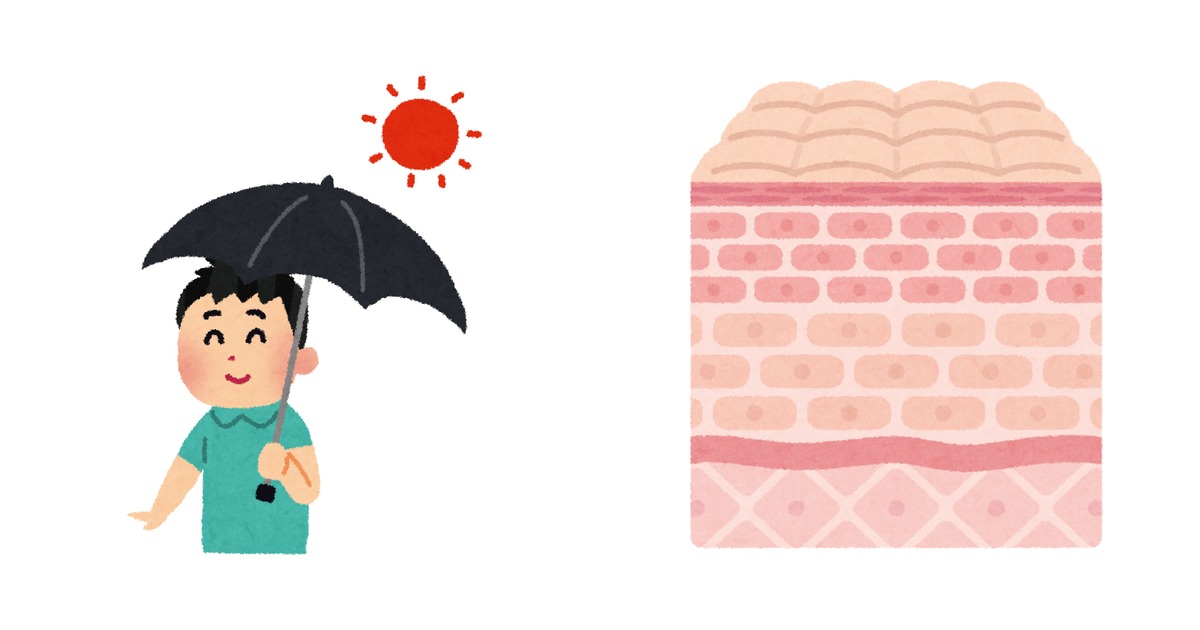
Your skin’s outer layer is made mostly of cells called keratinocytes. Two common cancers start in these cells. Basal cell carcinoma (BCC) starts in the deepest part of that layer. Squamous cell carcinoma (SCC) starts in the flatter cells above it. Doctors call the pair “keratinocyte carcinomas.” In this article, the plain term is simply “BCC and SCC.”
Melanoma is different. It starts in melanocytes, the cells that make skin pigment. Melanoma is much less common, but it is more likely to spread.
Here is how the three compare, based on national guidance:
| Feature | BCC | SCC | Melanoma |
|---|---|---|---|
| Cell of origin | Basal keratinocytes | Squamous keratinocytes | Melanocytes |
| How common | Most common skin cancer | Second most common | Less common |
| Chance of spreading | Low | Low, but higher than BCC | Higher |
| Share of skin cancer deaths | Small | Small | Most |
Sources: NCI and USPSTF summaries.
How common are BCC and SCC in the United States? No one knows exactly. Exact US case counts are not available. So researchers build estimates from insurance claims and doctor-visit surveys. One widely cited study estimated 5.4 million of these cancers in 3.3 million Americans in 2012.
In Medicare that year, there were about 3,280 BCC procedures per 100,000 beneficiaries. The SCC rate was nearly the same, about 3,278 per 100,000. NCI puts the lifetime risk of BCC at about 30 in 100 for people of European descent.
So what kind of spot should actually make me book an appointment?
The USPSTF notes these cancers infrequently lead to death, and its screening statement does not cover people with a worrying spot. A new, changing or non-healing spot is a good reason to ask your PCP or a dermatologist to take a look.
What should make you book a skin visit? Watch for a sore that does not heal. Also watch for a shiny or pearly bump, or a rough, scaly red patch. A spot that bleeds easily or keeps changing also counts. Think of it like a check-engine light: you do not need to know the cause to get it looked at.
Section recap: BCC and SCC are the most common cancers in the US, but they rarely spread or cause death. Any new, changing or non-healing spot is a reason to see a dermatologist.
2. How inherited risk works: many small gene effects, not one gene
Is there one skin cancer gene I could have inherited from my dad?
That is a very natural question. Two 2016 gene studies of about 300,000 people each found 11 gene spots for squamous cell and 31 for basal cell cancer, many tied to pigment, telomeres or immune control.
“Polygenic” means many genes. Each one nudges risk up or down by a tiny amount. A polygenic risk score adds up thousands of these small nudges into one number. From here on, this article calls it a “risk score.”
Twin studies show genes matter. A Nordic study of over 200,000 twins put the heritability of these skin cancers at about 43%. Heritability is a population idea. It means about 43% of the differences in risk between people trace back to inherited factors. It does not mean 43 in 100 people inherit skin cancer. And it is not your personal chance.
Where do these inherited effects come from? Two large genome-wide association studies (GWAS) looked for answers in 2016. A GWAS scans the DNA of many people with and without a disease. It looks for common gene spots that show up more often in one group.
| Study | People studied | Gene spots found | Main themes |
|---|---|---|---|
| SCC study, 2016 | 7,404 with SCC; 292,076 without | 11 spots | 7 linked to skin and hair color; 4 new |
| BCC study, 2016 | 17,187 with BCC; 287,054 without | 14 new spots, 17 confirmed | Skin-cell control, telomeres, immune system |
| Multi-trait study, 2022 | Over 300,000 people | 78 BCC spots, 69 SCC spots | Cancer growth, pigment, metabolism, immune system |
The SCC study found seven pigment genes, including MC1R, ASIP, TYR, SLC45A2, OCA2, IRF4 and BNC2. These help set skin, hair and eye color. Its four new spots included CADM1, AHR, SEC16A and a region on chromosome 2. CADM1 is tied to how tumors interact with the immune system. The BCC study pointed to telomeres, the protective caps on the ends of chromosomes. It also pointed to immune control.
Note one detail. A co-author of the SCC study worked at 23andMe. Several authors of the 2022 study did too, and they disclosed it.
My dad had a lot of BCCs fairly young. When should we ask about a rare syndrome?
NCI’s genetics summary describes rare conditions such as Gorlin syndrome, linked to PTCH1 or PTCH2 changes, that raise risk sharply. If many BCCs appeared at a young age, ask your doctor for a referral to a board-certified genetic counselor.
Rare single-gene syndromes are a separate story. These can raise risk sharply:
- Basal cell nevus syndrome (Gorlin syndrome): caused by changes in PTCH1 or PTCH2. One altered copy from either parent is enough to pass it on. NCI estimates it affects about 1 in 57,000 people. Other estimates are closer to 1 in 31,000.
- Xeroderma pigmentosum: the skin cannot repair sun damage well. Skin cancers can appear in the first decade of life.
- Oculocutaneous albinism, epidermolysis bullosa and Fanconi anemia: these raise SCC risk.
A consumer risk score is a polygenic panel. It is not built to diagnose these syndromes.
Also, there is no “carrier” status for a risk score. You cannot be a carrier of thousands of tiny nudges. Each child gets a fresh mix from both parents.
Section recap: BCC and SCC risk is shaped by dozens of common gene spots, many tied to skin color, telomeres and the immune system. Rare syndromes like Gorlin are different, so ask a genetic counselor if you have many BCCs at a young age.
3. How big is the genetic effect compared with sun, skin type and immune status?
Honestly, how much do genes matter compared with all the sunburns I got as a kid?
That is a common and fair question. The National Cancer Institute’s prevention summary lists fair skin, sun and UV exposure, a weakened immune system and arsenic exposure as evidence-graded risk factors, so genes sit alongside those rather than replacing them.
Think of your risk like a house’s fire risk. Sun exposure is the stack of dry wood. Skin type is how easily the wood catches. Genes are small changes in how dry the wood is. They matter, but they are not the main event.
NCI lists the factors with solid evidence:
- Fair skin: light skin, light hair, light eyes, freckles, or burning easily
- Sun and UV exposure: including sunburns and outdoor work
- A weak immune system: such as after an organ transplant
- Arsenic exposure: a less common cause
Now compare a few numbers. The table turns each relative figure into “out of 100” terms.
| Factor | Relative figure | What it means in plain terms |
|---|---|---|
| Family history of melanoma (BCC risk) | 1.31 times the risk | Lifetime BCC risk of about 30 in 100 rises to roughly 39 in 100 |
| Risk score, 1 step above average | Odds 1.66 times higher | About 4 in 100 rises to roughly 6 or 7 in 100 |
| Organ transplant (SCC) | 65 to 250 times the rate | For every 1 SCC in a similar group, recipients develop about 65 to 250 |
| Organ transplant (BCC) | About 10 times the rate | For every 1 BCC in a similar group, recipients develop about 10 |
A few notes on this table. The family history figure comes from large US health-worker studies. The “39 in 100” is simple arithmetic for illustration.
The risk score figure comes from a Canadian aging study. About 4 in 100 people in that sample had BCC or SCC. “One step” here means one standard deviation, a common unit of spread. The transplant figures compare rates, not lifetime risk. So never multiply 30 in 100 by 65.
Would a risk score actually change what my doctor tells me to do?
In a Queensland study of transplant recipients, adding a risk score to known factors raised a common accuracy measure only from 0.75 to 0.77 for BCC. Your PCP or a dermatologist can weigh your skin type and history first.
What happens when you add a risk score to the usual factors? One study tested this in transplant recipients in sunny Queensland, Australia. The score did sort people into groups. Recipients in the top fifth had more than three times the risk of the bottom fifth.
In the high-genetic-risk group, about 45 in 100 developed BCC and about 44 in 100 developed SCC. These people took strong immune-lowering drugs and lived with very high UV. Their numbers do not apply to most readers.
The more useful finding is about added value. A common accuracy measure rose only from 0.75 to 0.77 for BCC. For SCC it rose from 0.82 to 0.84. That is a small gain on top of skin type, sun and other known factors. About 19 in 100 people moved to a different risk group.
One more caution: most of this research was done in people of European ancestry. Risk scores tend to be less accurate for people of other ancestries. That is a limit, not a reason for worry or for relief.
Section recap: A risk score adds a small refinement to the risk you can already see in your skin, sun history and medical history. A dermatologist can weigh all of it together.
4. Testing options: a 23andMe polygenic report vs clinical genetic testing
Is a 23andMe skin cancer report the same as a genetic test ordered by a doctor?
Many people mix the two up. NCI’s genetics summary treats rare inherited syndromes such as Gorlin syndrome and xeroderma pigmentosum separately from the common, low-penetrance gene spots that a consumer score adds together.
Two very different kinds of tests are easy to mix up.
| Question | Consumer polygenic report | Clinical genetic test |
|---|---|---|
| Who orders it? | You, online | A clinician or genetic counselor |
| What does it look at? | Thousands of common variants | Specific genes linked to a suspected syndrome |
| What does it give you? | An estimate of likelihood | A yes, no or uncertain finding for a named gene |
| Who usually pays? | You | Often insurance, when criteria are met |
| When is it used? | Curiosity, general awareness | Signs of a rare syndrome |
The 23andMe “Skin Cancer (Basal and Squamous Cell Carcinomas)” report uses more than 11,000 variants, according to the company. It lists European, Hispanic/Latino, Northern African/Western Asian, and Sub-Saharan African/African American ancestries as relevant groups. This article does not cover its exact absolute-risk numbers or accuracy figures.
A clinical test is a different tool. It makes sense when someone shows signs of a rare syndrome. Examples include many BCCs at a young age, which can point to Gorlin syndrome. Another is severe sun damage and skin cancer in childhood, which can point to xeroderma pigmentosum. A board-certified genetic counselor can decide whether testing fits.
If I want a professional to look at this, who do I actually call?
Start with your primary care doctor, who can refer you. In the US, the American Board of Genetic Counseling certifies counselors with the CGC credential, and the directory at NSGC.org can help you find one near you.
Who counts as a certified genetic counselor? In the US, the American Board of Genetic Counseling (ABGC) certifies counselors. They use the letters “CGC.” The National Society of Genetic Counselors (NSGC) is the professional society. It does not certify anyone. But it runs a helpful directory at NSGC.org.
Picture the difference this way. A risk score is like a weather forecast for a whole region. A clinical test is like checking whether your own roof has a hole.
Section recap: A consumer risk score estimates likelihood from common variants, while a clinical test looks for a specific rare syndrome. Ask your primary care doctor or an ABGC-certified genetic counselor which, if either, you need.
5. Reading your result: what “increased” and “typical” likelihood do and do not mean
My report says “increased likelihood.” Does that mean skin cancer is coming for me?
That label understandably feels alarming. NCI calls the gene spots behind these scores low-penetrance and says their clinical usefulness is still uncertain, so the result is a statistical estimate rather than a diagnosis.
Your report will likely show one of a few results. Here is how to read each one.
- “Increased likelihood”: a statistical estimate. It is not a diagnosis. Most people with this result will not get every cancer the label suggests.
- “Typical likelihood”: not a clean bill of health. If you have fair skin, heavy sun exposure or past skin cancer, your risk can still be high.
- Any result: never a reason to skip or delay a skin check for a spot that worries you.
Why so modest? NCI calls these gene spots “low-penetrance”. Penetrance is the chance that a variant actually leads to disease. Low penetrance means each spot has a tiny effect. NCI also says the clinical use of these results is still uncertain. It describes risk scores as a relatively new area of research.
There is also an ancestry issue. Most gene studies so far have focused on people of European ancestry. Scores may be less reliable for everyone else. And a score is a probability, not a certainty. It also does not give you a time frame.
A good comparison is a credit score. It says something about trends across many people. It does not tell you what will happen to you next month.
What should I bring with me so the appointment is actually useful?
NCI’s prevention summary lists fair skin, sun exposure and a weakened immune system among the well-supported risk factors, so a short note on those plus your family history helps. Bring it, with your report, to your PCP or a dermatologist.
Here is a simple way to combine your result with what you already know:
- Write down your skin type and how easily you burn.
- Note any blistering sunburns, outdoor jobs or tanning-bed use.
- List family members with skin cancer, and which type.
- Note any past skin cancer or immune-lowering medicine.
- Bring this list, and your report, to a dermatologist.
Section recap: A risk score result is a nudge, not a verdict. A dermatologist should look at any new or changing spot, whatever the report says.
6. Prevention and early detection that actually has evidence
Should I be getting a full-body skin check every year, just in case?
Many people assume so. The USPSTF’s 2023 statement found the evidence insufficient to weigh the benefits and harms of routine clinician skin exams in people without symptoms, and it does not cover anyone with past skin cancer.
Start with skin checks. In 2023, the US Preventive Services Task Force (USPSTF) looked at routine full-body exams by a clinician. It found the evidence insufficient to judge benefits against harms. This is called an “I statement.” It is not a recommendation against skin checks.
This statement also has clear limits. It covers people with no symptoms. It does not cover people who already had skin cancer or a precancer. It does not cover anyone with a spot that worries them. If you have had skin cancer, had a transplant, or have a suspicious spot, your plan is a matter for your clinician.
How often should higher-risk people get checked? No guideline in this article’s sources uses a risk score to set that schedule. And this article does not give a set interval. A dermatologist sets it based on your history.
Next, sun protection. The current USPSTF advice on counseling dates from 2018:
| Who | USPSTF grade | What it says |
|---|---|---|
| Fair-skinned people aged 6 months to 24 years | B | Counsel them, or their parents, to limit UV exposure |
| Fair-skinned adults over 24 | C | Offer counseling selectively, based on individual risk |
| Adults and skin self-exams | I | Evidence is insufficient |
What does sunscreen do? Studies show it prevents sunburn and actinic keratoses. Those are rough, scaly patches that can turn into SCC. Trials were mixed on whether it prevents SCC itself. Still, these habits are simple:
- Seek shade around midday.
- Wear a wide-brimmed hat and long sleeves.
- Use broad-spectrum sunscreen on exposed skin.
- Skip tanning beds.
I’ve seen vitamin B3 pills online. Should I just start taking them?
The ONTRAC trial found 23% fewer new skin cancers with nicotinamide in people with past skin cancers, but the benefit faded after stopping, and NCI’s summary is more cautious. Ask your dermatologist or PCP before starting it.
Now, the vitamin B3 question. The ONTRAC trial tested nicotinamide, a form of vitamin B3, in Australia. It enrolled 386 people who had at least two skin cancers in the past five years. They took 500 mg twice a day or a dummy pill for a year.
| ONTRAC result | Relative change | Plain terms |
|---|---|---|
| All new BCC and SCC | 23% fewer | For every 100 new cancers expected, about 77 occurred |
| SCC | 30% fewer | For every 100 SCCs expected, about 70 occurred |
| BCC | 20% fewer, not statistically clear | For every 100 BCCs expected, about 80 occurred; could be chance |
| After stopping the pills | No lasting benefit | The effect faded once people stopped |
The evidence is not all one way. NCI’s review says there is no evidence that nicotinamide prevents SCC. A 2023 trial in transplant recipients found no benefit (Allen and colleagues, NEJM).
So the fair summary is this. One positive trial exists in people with past skin cancers. It has not been proven in transplant recipients. It does not replace sun protection or skin checks.
Nicotinamide is sold over the counter. It is not the same as niacin, a related form that was not tested. Talk to your dermatologist before starting it.
Section recap: Sun protection and clinician-led skin checks are the core plan, and nicotinamide has one positive trial in people with past skin cancers. Ask your dermatologist what fits your history.
7. Treatment landscape: from Mohs surgery to immunotherapy
If I do get one of these cancers someday, what does treatment usually look like?
That is a reasonable thing to wonder about. The National Cancer Institute notes these cancers have a much better outlook than melanoma. For most people treatment means removing the spot, while newer drugs are kept for advanced cases, as this section explains.
Most BCCs and SCCs are cured with simple treatment. The common options include:
- Surgical removal: cutting out the cancer with a margin of normal skin.
- Mohs surgery: removing thin layers one at a time and checking each under a microscope, to spare healthy skin.
- Scraping and burning (curettage), creams for some surface cancers, or radiation.
Only a small share of people develop advanced disease. Advanced means the cancer has spread or cannot be fully removed. For them, two drug families matter.
The first is hedgehog-pathway inhibitors, for BCC. These pills block a growth signal that is often stuck “on” in BCC. The second is checkpoint inhibitors, often called immunotherapy. These drugs release the brakes on the immune system so it can attack the tumor.
Here is the approval record. Dates come from the FDA and Health Canada databases.
| Drug (brand) | Use in skin cancer | FDA approval | Health Canada status |
|---|---|---|---|
| Vismodegib (Erivedge) | Advanced BCC | 2012-01-30 | Authorized 2013-07-12 |
| Sonidegib (Odomzo) | Advanced BCC | 2015-07-24 | Authorized 2020-06-12 |
| Cemiplimab (Libtayo) | Advanced SCC | 2018-09-28 | Authorized with conditions 2019-04-10 |
| Cemiplimab (Libtayo) | BCC after a hedgehog inhibitor | 2021-02-09 | No Canadian BCC approval found |
| Cemiplimab (Libtayo) | After surgery and radiation, high-risk SCC | 2025-10-08 | Authorized 2026-06-23 |
| Pembrolizumab (Keytruda) | Recurrent or spread SCC | 2020-06-24 | No Canadian SCC approval found |
| Pembrolizumab (Keytruda) | Locally advanced SCC | 2021-07-01 | No Canadian SCC approval found |
| Cosibelimab (Unloxcyt) | Spread or locally advanced SCC | 2024-12-13 | Not authorized in Canada |
Sources:.
If my dad’s cancer ever became advanced, how would we know which drugs are available in Canada versus the US?
Approval records do differ. FDA and Health Canada databases show cemiplimab has a US approval for BCC after a hedgehog inhibitor, but no Canadian BCC indication was found. Your dad’s oncologist or dermatologist can confirm what applies where he lives.
Two recent studies stand out.
Cosibelimab. In a trial of 78 people with SCC that had spread, tumors shrank substantially in about 47 of every 100. Serious immune side effects were uncommon. This trial had no comparison group. So it cannot show whether people lived longer. Health Canada’s approval of cemiplimab for advanced SCC rested on a similar response rate, about 47 in 100.
C-POST (adjuvant cemiplimab). “Adjuvant” means extra treatment after surgery, to lower the chance of return. This trial enrolled 415 people with high-risk SCC after surgery and radiation. Half got cemiplimab and half got a dummy drip.
| C-POST result at about 2 years | Cemiplimab | Placebo |
|---|---|---|
| Cancer came back or the person died | About 13 in 100 | About 36 in 100 |
| Cancer returned near the original site | About 4 in 100 | About 19 in 100 |
| Cancer spread to distant sites | About 5 in 100 | About 13 in 100 |
| Serious side effects (grade 3 or higher) | About 24 in 100 | About 14 in 100 |
The headline hazard ratio was 0.32. A hazard ratio compares how fast events happen in two groups. In plain terms, see the first row above. The study did not show a gain in overall survival yet. And it applies only to high-risk SCC already treated with surgery and radiation.
Think of these drugs as a fire crew for the rare blaze that escapes. Most people only ever need the smoke detector and a quick fix.
Section recap: Surgery cures most BCC and SCC, and checkpoint drugs help the small group with advanced disease. Approval differs between the US and Canada, so ask your oncologist or dermatologist what is available where you live.
8. Family, insurance and peace of mind
Should my siblings and kids get tested too? I’m not even sure how to bring it up.
Wanting to protect your family is very natural. A risk score has no single variant for relatives to test, unless a genetic counselor confirms a rare syndrome like Gorlin, which NCI describes as dominantly inherited. The USPSTF supports sun-safety counseling for fair-skinned people up to age 24.
What should you tell your family? For a single-gene condition, relatives can get “cascade testing” for the same variant. That does not work for a risk score. There is no single variant to look for.
The useful family message is simpler:
- Share your history. “Dad had several BCCs” is worth telling siblings and adult children.
- Share the traits. Fair skin and easy burning run in families.
- Share the habits. Families often share sun habits, for better or worse.
- Share the next step. Encourage anyone with a worrying spot to see a dermatologist.
For teens who play outdoor sports, the USPSTF supports counseling on sun protection up to age 24 for fair-skinned people. That makes hats, shade and sunscreen a family project.
Could a DNA result hurt my health insurance or my job?
In the US, GINA covers health insurance and most employers, though not life, disability or long-term care insurance. Canada’s Genetic Non-Discrimination Act limits requiring test results for contracts. A genetic counselor or your PCP can help you think it through.
Next, the legal side: insurance and jobs.
| Protection | Where | What it covers | What it does not cover |
|---|---|---|---|
| GINA (2008) | United States | Health insurance and employment | Life, disability and long-term care insurance; employers with fewer than 15 workers |
| Genetic Non-Discrimination Act (2017) | Canada | Bars requiring a genetic test or test results as a condition of a contract or service, including insurance | Provincial details vary; check local rules |
The Canadian Act also bars collecting, using or sharing your test results without written consent in those settings. Some US states add protections beyond GINA.
What about worry itself? It is normal to feel uneasy after an “increased likelihood” result. Remember, a risk score is a nudge, not a verdict. It is like a weather forecast that says “slightly higher chance of rain.” You bring an umbrella. You do not cancel your life.
If anxiety lingers, talk it through. A dermatologist can explain your real risk. A certified genetic counselor can put a genetic result in context.
Section recap: Family members share skin type and sun habits more than any testable variant, and US and Canadian laws limit some uses of genetic results. A dermatologist or ABGC-certified genetic counselor can help you weigh both.
Frequently asked questions
Does an “increased likelihood” report mean skin cancer is coming? Not necessarily. The result is a statistical estimate, not a diagnosis. In one large study, a score one step above average moved risk from about 4 in 100 to roughly 6 or 7 in 100. Your skin type and sun history usually matter more. Ask a dermatologist to review your overall risk.
Do children inherit a parent’s skin cancer risk? They may share some of it. Risk comes from many small gene effects. Each child gets a new mix of them from both parents. There is no carrier status for a risk score. Teaching sun safety early is the most useful step.
Can a DNA result affect health or life insurance? In the US, GINA protects you in health insurance. It does not cover life, disability or long-term care insurance. In Canada, the Genetic Non-Discrimination Act limits requiring or using genetic test results in contracts. Think before adding results to any record you share.
Can an employer find out about a DNA result? In the US, GINA bars most employers from using genetic information. It does not apply to employers with fewer than 15 workers. In Canada, the federal Act restricts requiring genetic test results as a condition of a contract.
Is a second opinion worth getting? Yes, if a diagnosis or treatment plan feels unclear. This matters most for advanced SCC or BCC, where options differ by country. For a genetic result, an ABGC-certified genetic counselor can give a careful second look.
Summary
- BCC and SCC are the most common cancers in the US, but they rarely spread.
- Inherited risk comes from many small gene effects, found in studies of over 300,000 people.
- A risk score adds only a small amount to what skin type, sun and medical history already tell you.
- No guideline in this article’s sources uses a risk score to set skin-check timing.
- Sun protection and clinician-led skin checks are the core plan, and nicotinamide has one positive trial in people with past skin cancers.
- New drugs help the few with advanced disease, with different approval in the US and Canada.
- GINA and Canada’s Genetic Non-Discrimination Act limit some uses of genetic results.
Your best next step is simple. Book a skin check with a dermatologist, and bring your history.
This article is for educational purposes only. It is not a substitute for advice from a licensed physician, board-certified medical geneticist, or board-certified genetic counselor. For any decisions about testing, treatment, or care, consult a qualified clinician. In emergencies, call 911.
References
- National Cancer Institute (2025) PDQ Cancer Genetics Editorial Board. Genetics of Skin Cancer (PDQ) – Health Professional Version (updated May 9, 2025). https://www.cancer.gov/types/skin/hp/skin-genetics-pdq
- National Cancer Institute (2025) PDQ Screening and Prevention Editorial Board. Skin Cancer Prevention (PDQ) – Health Professional Version (updated April 8, 2025). https://www.cancer.gov/types/skin/hp/skin-prevention-pdq
- Rogers HW, Weinstock MA, Feldman SR, Coldiron BM (2015) JAMA Dermatology. Incidence Estimate of Nonmelanoma Skin Cancer (Keratinocyte Carcinomas) in the U.S. Population, 2012. 151(10):1081-1086. PMID 25928283; DOI 10.1001/jamadermatol.2015.1187. https://pubmed.ncbi.nlm.nih.gov/25928283/
- Chahal HS, Lin Y, Ransohoff KJ, Hinds DA, et al. (2016) Nature Communications. Genome-wide association study identifies novel susceptibility loci for cutaneous squamous cell carcinoma. Nat Commun 2016;7:12048. PMID 27424798; DOI 10.1038/ncomms12048. https://pubmed.ncbi.nlm.nih.gov/27424798/
- Chahal HS, Wu W, Ransohoff KJ, Yang L, et al. (2016) Nature Communications. Genome-wide association study identifies 14 novel risk alleles associated with basal cell carcinoma. Nat Commun 2016;7:12510. PMID 27539887; DOI 10.1038/ncomms12510. https://pubmed.ncbi.nlm.nih.gov/27539887/
- Seviiri M, Law MH, Ong JS, et al.; 23andMe Research Team (2022) Nature Communications. A multi-phenotype analysis reveals 19 susceptibility loci for basal cell carcinoma and 15 for squamous cell carcinoma. Nat Commun 2022;13:7650. PMID 36496446; PMCID PMC9741635; DOI 10.1038/s41467-022-35345-8. https://pubmed.ncbi.nlm.nih.gov/36496446/
- Seviiri M, Law MH, Ong JS, et al. (2021) Journal of Investigative Dermatology. Polygenic Risk Scores Stratify Keratinocyte Cancer Risk among Solid Organ Transplant Recipients with Chronic Immunosuppression in a High Ultraviolet Radiation Environment. J Invest Dermatol 2021;141(12):2866-2875.e2. PMID 34089721; DOI 10.1016/j.jid.2021.03.034. https://pubmed.ncbi.nlm.nih.gov/34089721/
- US Preventive Services Task Force (2023) JAMA. Screening for Skin Cancer: US Preventive Services Task Force Recommendation Statement. JAMA 2023;329(15):1290-1295. PMID 37071089; DOI 10.1001/jama.2023.4342. https://pubmed.ncbi.nlm.nih.gov/37071089/
- US Preventive Services Task Force (2018) JAMA. Behavioral Counseling to Prevent Skin Cancer: US Preventive Services Task Force Recommendation Statement. JAMA 2018;319(11):1134-1142. PMID 29558558; DOI 10.1001/jama.2018.1623. https://www.uspreventiveservicestaskforce.org/uspstf/recommendation/skin-cancer-counseling
- Chen AC, Martin AJ, Choy B, et al. (2015) New England Journal of Medicine (ONTRAC). A Phase 3 Randomized Trial of Nicotinamide for Skin-Cancer Chemoprevention. N Engl J Med 2015;373(17):1618-1626. PMID 26488693; DOI 10.1056/NEJMoa1506197. https://pubmed.ncbi.nlm.nih.gov/26488693/
- Rischin D, Porceddu S, Day F, Brungs DP, et al.; C-POST Trial Investigators (2025) New England Journal of Medicine. Adjuvant Cemiplimab or Placebo in High-Risk Cutaneous Squamous-Cell Carcinoma. N Engl J Med 2025;393(8):774-785. PMID 40454639; DOI 10.1056/NEJMoa2502449; NCT03969004. https://pubmed.ncbi.nlm.nih.gov/40454639/
- Clingan P, Ladwa R, Brungs D, Harris DL, et al. (2023) Journal for ImmunoTherapy of Cancer. Efficacy and safety of cosibelimab, an anti-PD-L1 antibody, in metastatic cutaneous squamous cell carcinoma. PMID 37848259; DOI 10.1136/jitc-2023-007637. https://pubmed.ncbi.nlm.nih.gov/37848259/
- U.S. FDA Drugs@FDA / openFDA; Health Canada Notice of Compliance database and Drug Product Database (2012-2026). Regulatory approval record: vismodegib (Erivedge), sonidegib (Odomzo), cemiplimab (Libtayo), pembrolizumab (Keytruda) for keratinocyte carcinomas. https://api.fda.gov/drug/drugsfda.json?search=application_number:BLA761097 ; https://health-products.canada.ca/noc-ac/ ; https://dhpp.hpfb-dgpsa.ca/review-documents/resource/RDS00508
- National Human Genome Research Institute (NHGRI) GINA overview; Government of Canada, Genetic Non-Discrimination Act, S.C. 2017, c. 3. Genetic Discrimination (GINA 2008, Public Law 110-223) / Genetic Non-Discrimination Act (Canada). https://www.genome.gov/about-genomics/policy-issues/Genetic-Discrimination ; https://laws-lois.justice.gc.ca/eng/acts/G-2.5/FullText.html
Other sources mentioned in the text (not numbered):
- Allen NC, et al. (2023) N Engl J Med 388(9):804-812. Nicotinamide for Skin-Cancer Chemoprevention in Transplant Recipients. PMID 36856616; DOI 10.1056/NEJMoa2203086.
- MedlinePlus Genetics (NLM). Gorlin syndrome. https://medlineplus.gov/genetics/condition/gorlin-syndrome/
- NHGRI. Polygenic Risk Scores fact sheet. https://www.genome.gov/Health/Genomics-and-Medicine/Polygenic-risk-scores
- 23andMe clinician catalog. Health Predisposition reports. https://www.23andme.org/clinicians/genetic-reports/health-predispositions/
Last updated: 2026-10-08
Author: genelumen editorial team. This article aggregates 14 sources (tier 1=12 / tier 2=2). They include the National Cancer Institute, the US Preventive Services Task Force, the US FDA and Health Canada. They also include NHGRI, the Government of Canada and peer-reviewed journals indexed in PubMed. Edited by Yu Mizuno, a non-physician research editor.
This article is for educational purposes only and is not a substitute for medical advice from a licensed physician, board-certified medical geneticist, or board-certified genetic counselor. In emergencies, call 911 (US/Canada) or 119 (Japan).
Related: Hereditary Cancer category
🇯🇵 For readers in Japan — a separate Japanese edition written for Japan’s healthcare system (not a translation): https://genelumen.com/ja/ja-hereditary-cancer/keratinocyte-skin-cancer-genetic-risk