- Is Rosacea Genetic? What Twin and Gene Studies Show About Family Risk
- Is rosacea genetic? What twin and family studies show
- Which genes are involved: HLA-DRA, BTNL2 and the immune system
- How common is rosacea, and what is the real risk?
- What a 23andMe rosacea report can and cannot tell you
- Rosacea look-alikes: why a clinician should confirm it
- Prevention and trigger control: what research supports
- Treatment options in the US and Canada, including new approvals
- Family, insurance and talking about it
- Frequently asked questions
- Summary
- References
Is Rosacea Genetic? What Twin and Gene Studies Show About Family Risk
This article is for educational purposes only. It does not replace medical care, diagnosis, or genetic counseling. Please talk with a licensed physician, a board-certified medical geneticist, or a certified genetic counselor. For any decision about testing or treatment, consult a qualified clinician. In emergencies, call 911.
My dad has had red cheeks and bumps for years, and it was finally called rosacea. Now my own face flushes after coffee. Am I next?

That is an understandable worry. US government health guidance says a family history may raise risk while more research is needed, so this article looks at what the studies can and cannot settle.
I did a 23andMe test. If my rosacea report comes back as a higher-likelihood result, can I even handle that?
Feeling uneasy about a result is understandable. The company itself says these reports are not meant to guide medical decisions, and you do not have to process one alone; that is exactly what a genetic counseling session is for.
My wife and I have two young kids. Could they end up with this from me, too?
That is a natural question for any parent. Dermatology guidance lists a blood relative with rosacea as one factor among several, alongside age and skin type, and the sections ahead explain why family history matters more here than any test.
OK, so what do I actually do with all of this?
The sections ahead walk through risk in plain numbers, sun and trigger habits, treatments listed in FDA and Health Canada records, and when to see a primary care clinician, a dermatologist or an eye doctor.
Bottom line: Research shows that rosacea is partly genetic. A twin study found that about half of the differences in rosacea scores between people traced to genes. A large gene study linked one immune-system region to rosacea, though no single gene has been shown to cause it. About 5 to 6 adults in every 100 have rosacea. A family history raises the odds by an amount research has not pinned down. Sun protection, trigger control and a clinician’s diagnosis also matter.
What you’ll learn
- What twin and gene studies really say about how much of rosacea is “in the genes”
- How common rosacea is, shown as plain numbers out of 100
- What a 23andMe rosacea report can and cannot tell you
- Which treatments are approved in the US and in Canada, and when to see a clinician
Is rosacea genetic? What twin and family studies show
If my dad has rosacea, does that mean it is basically written into my DNA?
Not exactly, though it is a fair question. NIAMS describes rosacea as likely shaped by both genes and environment, and notes that more research is needed on the role of genetics. A family history is a clue, not a verdict.
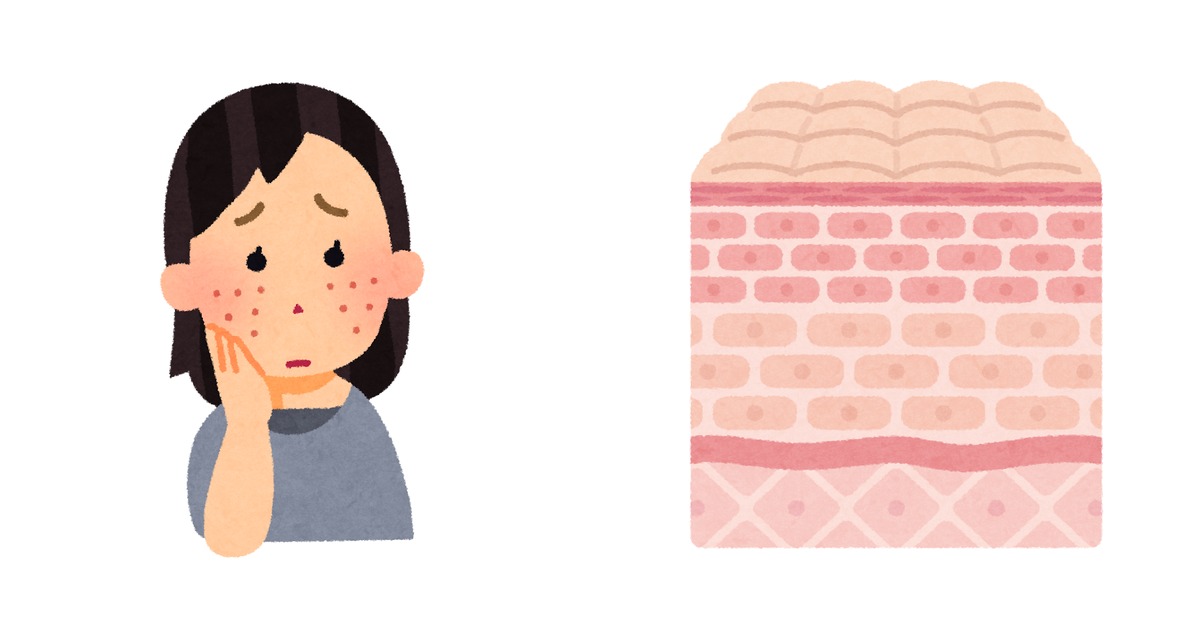
Rosacea is a long-term skin condition. It causes redness and a rash, usually on the nose and cheeks. It can also affect the eyes. There is no cure, but treatment can keep it under control.
The short answer to “is rosacea genetic?” is “partly.” Rosacea is polygenic. That means many common gene variants each add a small push, rather than one gene causing it. Environment and age matter as well. The US National Institute of Arthritis and Musculoskeletal and Skin Diseases (NIAMS) says people with a family history may be at higher risk. It adds that more research is needed on the role of genes.
The twin study behind “about half”
The best numbers come from a 2015 twin study in JAMA Dermatology. Skin doctors examined 550 twins at the Twins Days Festival in Twinsburg, Ohio. That was 275 pairs: 233 identical pairs and 42 fraternal pairs. Each person got a rosacea score using the National Rosacea Society grading system.
Identical twins share nearly all their genes. Fraternal twins share about half. In the study, identical twins had more closely matched scores than fraternal twins. That pattern points to a genetic effect.
The researchers then estimated heritability. Heritability is the share of differences between people in a group that traces to genes. Their model put it at 46% of the variation in rosacea scores. In plain words, about half of the differences in rosacea scores in this study traced to genes. The other half traced to environment and age.
This number is easy to misread. Here is what it does and does not mean:
- It does mean genes help explain why some people have more rosacea than others.
- It does mean environment explains a large share too.
- It does not mean you have a 46% chance of getting rosacea.
- It does not mean half of your own rosacea comes from your parents.
- It does not mean the figure applies everywhere, since most twins came from Ohio, Pennsylvania and the northeastern US.
The same study found other links. Higher scores went with older age and more lifetime sun exposure. Those two links held up after extra checks. Weaker links appeared for body weight, alcohol and smoking. The design was a survey, so it shows links, not cause and effect.
So with my dad’s history, what is a sensible first step for me right now?
The twin study linked more lifetime sun exposure and older age with higher rosacea scores, so daily sun protection is a reasonable habit. Mention your dad’s history to your primary care clinician at your next visit.
Think of genes as the deck of cards you are dealt. Sun, age and daily habits decide how the hand is played. If a parent has rosacea, your primary care clinician is a good first person to tell.
Section recap: Rosacea is partly genetic, but it is not a single-gene condition. In one twin study, about half of the differences in rosacea scores traced to genes, and sun exposure and age also mattered.
Which genes are involved: HLA-DRA, BTNL2 and the immune system
Is there one rosacea gene I could simply check for?
That would be simpler, but no. A 2015 gene study of about 52,400 people replicated one marker near the HLA-DRA and BTNL2 genes, plus three HLA immune-gene variants, and the authors described them as candidates for future study.
To find specific genes, researchers use a genome-wide association study (GWAS). A GWAS scans many common DNA markers. It compares people who have a condition with people who do not.
A large rosacea GWAS was published in 2015. It used data from 23andMe customers. Stanford dermatologists co-wrote it with 23andMe scientists. The study had two groups, about 52,400 people in total. The first group found candidate markers. The second group checked whether they held up.
| Study group | People | People with rosacea | Purpose |
|---|---|---|---|
| Discovery group | 22,952 | 2,618 | Find candidate markers |
| Replication group | 29,481 | 3,205 | Check the findings |
In the discovery group, about 11 in every 100 people reported rosacea. That is a study sample, not a population rate.
What the study found
One marker held up in both groups. It is called rs763035. It sits between two genes, HLA-DRA and BTNL2. Three related gene versions were also linked in both groups.
These genes belong to the MHC class II system. MHC class II proteins are immune proteins. They show small pieces of protein to immune cells, like a guard holding up an ID card. So the results point to the immune system as part of the story.
| Gene or region | What it does | What it means for a reader |
|---|---|---|
| Marker rs763035 (between HLA-DRA and BTNL2) | Lies in an immune-system gene region | Linked to rosacea in two groups |
| HLA-DRB1*03:01 | MHC class II immune protein | Linked in both groups; not a diagnosis |
| HLA-DQB1*02:01 | MHC class II immune protein | Linked in both groups; not a diagnosis |
| HLA-DQA1*05:01 | MHC class II immune protein | Linked in both groups; not a diagnosis |
A small lab test added one more clue. In skin samples from 6 people with rosacea bumps, the HLA-DRA and BTNL2 proteins appeared in inflamed cells around hair follicles.
What these genes do not tell you
The authors called these variants candidates for future study. They did not offer a way to predict any one person’s risk. Carrying one of these versions does not mean rosacea will appear.
NIAMS describes several possible causes beyond genes. These include inflammation, skin sensitivity, sun exposure and microbes that live on the skin. Experts now sort rosacea by its visible features, linked to these processes.
If my report shows one of those immune gene versions, should I bring it up with my doctor?
You can, with realistic expectations. The 2015 study’s authors did not offer any way to predict one person’s risk from these variants. A primary care clinician or certified genetic counselor can explain it, and a dermatologist can examine your skin.
If gene results feel confusing, a genetic counselor or primary care clinician can explain them. A dermatologist (skin specialist) is the right person for the skin itself.
Section recap: A large gene study linked a region between HLA-DRA and BTNL2, plus three immune-system gene versions, to rosacea. None can predict one person’s risk.
How common is rosacea, and what is the real risk?
How many people actually end up with rosacea? I honestly can’t tell if it’s rare or common.
Starting with the base rate is wise. A 2018 review pooling 32 studies and more than 26 million people estimated that about 5 to 6 adults in every 100 have rosacea, though estimates vary by method.
Before thinking about family risk, start with the base rate. That is how common rosacea is in everyone.
A 2018 review pooled 32 studies covering more than 26 million people. It found that about 5.5% of the general population has rosacea. That is about 5 to 6 adults in every 100. Estimates vary by method. Surveys tend to give higher numbers than skin exams or medical records. So the true figure is uncertain.
| Group | Share with rosacea | Out of 100 people |
|---|---|---|
| General population | 5.46% | About 5 to 6 |
| Women | 5.41% | About 5 |
| Men | 3.90% | About 4 |
The review found rosacea mostly affects people aged 45 to 60.
Who is more often affected
NIAMS lists groups with higher rates:
- Middle-aged and older adults
- Women, although men often have more severe disease
- People with fair skin
- People with a family history of rosacea
The American Academy of Dermatology (AAD) adds a few more factors. Rosacea seems more likely after age 30. It is also more likely in people who had many acne breakouts. Menopause and a blood relative with rosacea or severe acne also raise the odds.
Rosacea may be missed in darker skin. Darker skin can hide redness and visible blood vessels. Dermatologists are now diagnosing it more often in people of Asian, Latin American and African ancestry.
What a family history might mean in numbers
None of the studies cited here measured exactly how much a family history raises the odds. NIAMS says only that risk “may be” higher. So any number here is a “what if,” not a fact.
Here is a purely illustrative example. Suppose a family history doubled the odds. Then about 5 to 6 in 100 would become about 10 to 12 in 100. Even then, about 88 to 90 of every 100 people would still not develop rosacea. This is not an individual prediction.
So given my dad’s history, how worried should I realistically be?
NIAMS says only that risk may be higher, and the sources reviewed here do not pin down by how much. Even in a purely hypothetical doubling, most people with an affected parent would not develop it. Your primary care clinician can weigh your whole picture.
It is like a weather forecast that moves from a small chance of rain to a slightly bigger one. Most days still stay dry. A clinician can look at the whole picture, including skin type and sun habits.
Section recap: About 5 to 6 adults in every 100 have rosacea. A family history raises the odds by an unknown amount, and research has not measured how much.
What a 23andMe rosacea report can and cannot tell you
My 23andMe report flagged rosacea. Does that mean I’m going to get it?
Not necessarily. 23andMe describes the report as a model built from more than 14,000 variants, and says such reports are not meant to describe current health or guide medical decisions. It is an estimate, not a diagnosis.
23andMe lists a rosacea report among its polygenic reports. The company says the model uses more than 14,000 gene variants. It lists six ancestry groups for this report:
- East/Southeast Asian
- European
- Hispanic/Latino
- Northern African/Western Asian
- South Asian
- Sub-Saharan African/African American
What the company itself says
The 23andMe page explains that its Health Predispositions reports come in two types. Some meet FDA requirements. Others are “Powered by 23andMe Research” and have not been reviewed by the FDA. The page does not say which of the two types the rosacea report is. The company says these reports are not meant to describe current health or to guide medical decisions. People with a personal or family history should talk with a healthcare provider.
No accuracy figures for this report are covered in this article. The company page is a product description, not proof that the report works.
Risk estimate versus diagnosis
A polygenic report and a clinical diagnosis answer different questions.
| Polygenic report (such as 23andMe) | Clinical diagnosis |
|---|---|
| Reports a research-based genetic estimate | Says whether rosacea is present now |
| Based on thousands of small gene effects | Based on a skin and eye exam plus history |
| Cannot rule rosacea in or out | Can confirm rosacea or find another cause |
| Not for medical decisions, per the company | Guides treatment |
There is no specific test for rosacea. No lab or genetic test diagnoses it. Doctors diagnose it by looking at the skin and eyes and asking about history. They may order tests to rule out look-alike conditions.
A report that says “increased likelihood” is like a road sign warning of deer. It does not mean a deer is on the road. A report that says “typical likelihood” does not mean the road is clear, either.
A note on terms
Some readers have heard of a “variant of uncertain significance.” It means a gene change whose effect on health is not yet known. That term applies to single-gene tests. It does not apply to polygenic scores like this one.
Should I bring the printout to my doctor, or is that a waste of their time?
It is worth bringing. NIAMS notes there is no specific test for rosacea; clinicians diagnose it from the skin, eyes and history. Your primary care clinician can examine you, and a certified genetic counselor can put the report in context.
If a report causes worry, bring it to a primary care visit. A certified genetic counselor can also help put a report in context.
Section recap: A 23andMe rosacea report estimates likelihood from many small gene effects. It is not a diagnosis, and rosacea is confirmed only by a clinician’s exam.
Rosacea look-alikes: why a clinician should confirm it
Lots of people get red cheeks. How would I know whether mine is actually rosacea?
That is hard to judge alone. The 2019 ROSCO expert panel treats lasting central facial redness or skin thickening, most often on the nose, as diagnostic, and the AAD notes that lupus can also cause a lasting color change of the face.
Facial redness has many causes. Rosacea is only one of them. That is why a clinician should confirm it before long-term treatment.
How experts define rosacea
Experts now classify rosacea by phenotype. A phenotype is a visible feature you can see or feel. The National Rosacea Society moved to this approach in its 2017 update. A global expert panel, called ROSCO, supported the same approach in 2019.
According to ROSCO, either one of two features is enough to diagnose rosacea:
- Lasting redness in the center of the face, which may flare with triggers
- Thickened skin, most often on the nose
Major features include flushing, bumps and pimples, and visible blood vessels. Doctors call the bumps and pimples papules and pustules. This article uses “bumps and pimples” from here on. Minor features include burning, stinging, dryness and swelling.
Conditions that can look similar
A clinician can tell these apart from rosacea. Self-diagnosis often cannot:
- Acne: common and sometimes confused with rosacea. A history of acne also makes rosacea more likely.
- Lupus: this immune disease can cause a long-lasting color change on the face. Testing is sometimes needed to rule it out.
- Other rashes: other skin problems can also cause facial redness and need a clinician’s look.
FDA labeling for clobetasol, a strong steroid cream, is clear. It says the cream should not be used to treat rosacea or be used on the face. So avoid long-term self-treatment with steroid or over-the-counter creams for facial redness.
Eye symptoms need prompt care
More than 50 in every 100 people with rosacea develop an eye problem at some point. Eye rosacea can inflame the eyelids and the clear front of the eye. In severe cases, it can lead to vision loss. Untreated eye involvement can damage the eyes.
My eyes feel gritty and dry some mornings. Could that be related, and who should I see?
It might be. The AAD says more than half of people with rosacea develop an eye problem at some point. With eye irritation, see an eye doctor (optometrist or ophthalmologist) or a dermatologist promptly.
See a clinician if any of these apply:
- Redness on the cheeks or nose that lasts for weeks
- Bumps or pimples that do not clear with gentle care
- Gritty, red, burning or watery eyes, or swollen eyelids. See an eye doctor (optometrist or ophthalmologist) or a dermatologist right away.
- Redness after using steroid creams on the face
- Redness that is hard to tell apart from acne or other rashes
- Thickening skin on the nose
Section recap: Rosacea is diagnosed by its visible features, and several conditions look similar. Eye symptoms and unclear rashes should be checked promptly by a clinician.
Prevention and trigger control: what research supports
I can’t change my genes. Is there anything I can do that actually makes a difference?
Some things, yes. The 2015 twin study linked more lifetime sun exposure with higher rosacea scores, and NIAMS lists sunlight as a common trigger, so daily sun protection is the best-supported habit. Research has not shown that any step prevents rosacea in relatives, though.
Genes cannot be changed. But flares can often be reduced. Research has not shown that any step prevents rosacea in high-risk relatives. Still, good habits can calm symptoms.
The strongest lifestyle signal: sun
The twin study found that more lifetime sun exposure went with higher rosacea scores. This was one of the clearest environmental links in the research. It supports daily sun protection as the most evidence-based lifestyle step.
The AAD advises everyone with rosacea to use sunscreen daily. It should be gentle, broad-spectrum and SPF 30 or higher. Zinc oxide or titanium dioxide formulas are least likely to sting. A wide-brimmed hat and shade also help.
Common triggers
NIAMS lists common triggers. They include sunlight, stress, hot or cold weather, strong wind and hard exercise. Alcohol, hot baths, spicy foods and hot drinks are also on the list.
Most trigger advice comes from patient guidance and surveys, not from controlled trials. The table below shows how strong the evidence is.
| Trigger | Strength of evidence | Practical step |
|---|---|---|
| Sun and UV light | Measured link in a twin study | Daily SPF 30+, hat, shade |
| Heat, hot baths, hot drinks | Patient guidance | Let drinks cool; use lukewarm water |
| Alcohol | Weak link in a twin study | Track flares after drinks |
| Spicy foods | Patient guidance | Note reactions in a diary |
| Stress | Patient guidance | Short breaks, steady sleep |
| Hard exercise | Patient guidance | Cool rooms, shorter sessions |
| Wind and cold | Patient guidance | Scarf, gentle moisturizer |
Simple daily habits
NIAMS also suggests keeping a record of what sets off flares. It recommends gentle cleansers. A trigger diary works like a detective’s notebook. After a few weeks, patterns often appear.
Coffee, wine and tough meetings all seem to set me off. How do I figure out my own triggers?
NIAMS suggests keeping a record of what sets off flares, and most trigger evidence comes from patient guidance rather than trials, so your own diary matters. Bring it to your primary care clinician or a dermatologist.
Treatment and good habits take time. Improvement is usually gradual and can take 3 months or longer. Bring the trigger diary to a clinic visit. It helps the clinician choose the right plan.
Section recap: Sun exposure has the clearest research link to worse rosacea. Daily sunscreen, a trigger diary and gentle skin care are the best-supported steps, though most trigger evidence is observational.
Treatment options in the US and Canada, including new approvals
If I do have rosacea, do treatments actually work, or is it just something to live with?
Many options help. A 2015 Cochrane review of 106 trials found high-quality evidence for treatments such as azelaic acid, ivermectin cream and doxycycline. There is no cure, but treatment can keep rosacea under control.
There is no cure, but many treatments work for specific features. The National Rosacea Society’s 2019 update encourages treating each person’s actual features. ROSCO adds that the goal is complete clearance. It suggests combining treatments when several features are present.
What the Cochrane review found
A Cochrane review is a careful summary of all good trials on a topic. The rosacea review covered 106 trials and 13,631 people, with searches up to July 2014. Most trials were small and lasted 2 to 3 months.
- High-quality evidence: topical azelaic acid, ivermectin cream, brimonidine for redness, doxycycline and isotretinoin
- Moderate-quality evidence: topical metronidazole and oral tetracycline
- Low-quality evidence: low-dose minocycline, laser, intense pulsed light and an eye emulsion for eye rosacea
Low-quality evidence suggested low-dose doxycycline (40 mg) worked as well as 100 mg, with fewer side effects. The review predates several newer products, including EMROSI, Zilxi, Epsolay and Rhofade.
Approved drugs: US and Canada side by side
US brand names and Canadian brand names can differ for the same ingredient. In the table, the Health Canada column uses Drug Product Database (DPD) listings. DPD dates are first-marketed dates, not approval dates.
| Drug (ingredient) | Form | Main use (US label) | FDA approval | Health Canada status |
|---|---|---|---|---|
| EMROSI (minocycline 40 mg extended-release) | Capsule | Bumps and pimples | 2024-11-01 | Not listed in DPD as of October 2026 |
| Oracea (doxycycline 40 mg) | Capsule | Bumps and pimples | 2006-05-26 | Sold as Apprilon; first marketed 2012-11-29 |
| Soolantra (ivermectin 1%) | Cream | Bumps and pimples | 2014-12-19 | Sold as Rosiver; first marketed 2015-05-25 |
| Zilxi (minocycline 1.5%) | Foam | Bumps and pimples | 2020-05-28 | Not listed in DPD as of October 2026 |
| Epsolay (benzoyl peroxide 5%) | Cream | Bumps and pimples | 2022-04-22 | Marketed; first marketed 2026-03-12 |
| Finacea (azelaic acid 15%) | Gel; foam | Bumps and pimples | Gel 2002-12-24; foam 2015-07-29 | Gel marketed; first marketed 2010-06-15 |
| MetroGel (metronidazole) | Gel | Inflammatory lesions | 0.75% 1988-11-22; 1% 2005-06-30 | Marketed (0.75% and 1%) |
| Mirvaso (brimonidine 0.33%) | Gel | Lasting redness | 2013-08-23 | Sold as Onreltea; first marketed 2014-03-24 |
| Rhofade (oxymetazoline 1%) | Cream | Lasting redness | 2017-01-18 | Not listed in DPD as of October 2026 |
A few label details matter:
- Oracea’s US label covers only bumps and pimples. It was not tested for redness, visible vessels or eye symptoms.
- In Canada, Finacea gel and MetroGel labels also cover redness. US labels cover bumps and pimples.
- Noritate (metronidazole 1% cream) is also marketed in Canada.
EMROSI and the MVOR trials
EMROSI is the newest oral option in the US. The FDA approved it on November 1, 2024. It is a new low-dose form of minocycline, not a new drug molecule. Its label says it was not studied for treating infections.
Two phase 3 trials, called MVOR-1 and MVOR-2, supported the approval. They enrolled 653 adults with moderate to severe bumps and pimples. People took EMROSI, doxycycline 40 mg or a placebo once a day for 16 weeks.
| Trial | EMROSI success | Doxycycline 40 mg success | Placebo success |
|---|---|---|---|
| MVOR-1 | 65 in 100 | 46 in 100 | 31 in 100 |
| MVOR-2 | 60 in 100 | 31 in 100 | 27 in 100 |
“Success” meant clear or nearly clear skin plus a clear improvement on a doctor’s scale. About 60 to 65 of every 100 people on EMROSI reached success, versus about 27 to 31 of every 100 on placebo. That is roughly 33 more people per 100. Compared with low-dose doxycycline, about 18 to 28 more people per 100 succeeded.
Adverse events were reported by 26.4% and 41.8% of people on EMROSI in the two trials. An adverse event is any health problem during a trial, whether or not the drug caused it. Rates on placebo were 35.5% and 36.6%. The most common were colds and COVID-19.
Two limits are worth knowing. The trials were funded by the drug’s sponsor, Journey Medical. Also, 93% of the trial population was White. So the results say little about darker skin.
I read about EMROSI. Could I get it in Canada, or is it only a US option?
EMROSI is FDA-approved, but as of October 2026 it is not listed in Health Canada’s Drug Product Database. Other options are marketed in Canada, such as Apprilon and Rosiver, so ask your dermatologist or pharmacist what fits your plan.
Other options
Laser and intense pulsed light (a light-based skin treatment) have been studied for rosacea, but the evidence is low quality. Pulsed dye laser looked about as effective as intense pulsed light. Insurance and drug plan coverage differ across the US and Canadian provinces. Ask a dermatologist or pharmacist about coverage before choosing.
Topical treatments may show slight improvement in 3 to 4 weeks. A clear difference usually takes 2 to 3 months.
Section recap: Many US and Canadian treatments target specific rosacea features. EMROSI, approved by the FDA in 2024, helped about 33 more people per 100 than placebo, but it is not listed in Canada’s drug database.
Family, insurance and talking about it
Should I tell my sister and, someday, my kids about this, even though there’s no test for it?
Sharing family history is reasonable. NIAMS notes there is no specific test for rosacea, so knowing the family pattern helps relatives watch for lasting redness or eye irritation and start daily sun protection.
Talking with family
For single-gene conditions, relatives often get tested once one person has a result. Rosacea does not work that way. There is no test that diagnoses it. So family history is the practical tool.
Here is who to tell, and why:
- Siblings: they can watch for early signs, such as lasting redness or eye irritation.
- Adult children: they can start daily sun protection and know when to see a clinician.
- Parents: their history can help a clinician understand a pattern.
No step has been shown to prevent rosacea in relatives. Testing children for rosacea risk is not useful. No test diagnoses rosacea, and no study shows that early testing helps. Simple sun habits are a reasonable family routine.
US law: GINA
The Genetic Information Nondiscrimination Act (GINA) became law in 2008. Under GINA, “genetic information” includes genetic test results. It also includes relatives’ test results and family medical history.
| GINA covers | GINA does not cover |
|---|---|
| Employers with 15 or more employees | Life insurance |
| Private health insurers | Disability insurance |
| Medicare and Medicaid | Long-term-care insurance |
| Federal employee plans and VA health care | Employers with fewer than 15 employees |
Some states add extra protections. A worker who faces job bias has 180 days to file a charge with the EEOC.
Canadian law: the Genetic Non-Discrimination Act
Canada’s Genetic Non-Discrimination Act became law in 2017. It bars anyone from requiring a genetic test as a condition of goods, services or contracts. It also bars requiring someone to share genetic test results for those purposes. The Act covers tests of DNA, RNA or chromosomes. Its text does not mention family medical history.
The emotional side
Rosacea shows on the face, so it can affect how people feel day to day. Stress is also a listed trigger. A trusted clinician, a counselor or a patient group can help.
Could my 23andMe result or my dad’s history be used against me by an insurer or employer?
In the US, GINA counts family medical history as genetic information and covers health insurers and employers with 15 or more employees, but not life, disability or long-term-care insurance. Canada’s Act protects genetic test results; its text does not mention family history. ABGC- or CBGC-certified genetic counselors can help.
Finding a genetic counselor
Genetic counseling is a talk with a trained specialist about what genetic results mean for a person and their family. Most people with rosacea do not need it, but it can help if a direct-to-consumer report is confusing. In the US, genetic counselors are certified by the American Board of Genetic Counseling (ABGC). The National Society of Genetic Counselors runs a find-a-counselor directory but does not certify. In Canada, the Canadian Board of Genetic Counselling (CBGC) issues the CCGC credential. The Canadian Association of Genetic Counsellors (CAGC) is a professional group with a Find a Clinic tool.
Section recap: Family history is the main family tool for rosacea, not testing. GINA and Canada’s Genetic Non-Discrimination Act protect genetic information in different ways, with clear gaps.
Frequently asked questions
Does a parent’s rosacea mean a child will get it?
Not necessarily. A family history may raise the odds, but research has not measured by how much. About 5 to 6 adults in every 100 have rosacea. Even in a hypothetical case where the chance doubled, most people with an affected parent would still not get it. Rosacea is more likely after age 30.
Can a 23andMe rosacea report diagnose rosacea?
No. The report estimates likelihood from more than 14,000 variants. The company says it is not meant for medical decisions. Only a clinician can diagnose rosacea, by examining the skin and eyes.
Can a rosacea genetic result affect insurance or a job?
In the US, GINA protects against misuse by health insurers and employers with 15 or more workers. It does not cover life, disability or long-term-care insurance. In Canada, the Genetic Non-Discrimination Act bars requiring genetic test results for contracts or services.
Is there a test that confirms rosacea?
There is no specific test. A clinician confirms rosacea from its visible features and history. Tests may be used to rule out look-alikes, such as lupus.
When is a second opinion worth considering?
A noticeable difference usually takes 2 to 3 months. If there is none, a second opinion can help. It also helps if the diagnosis is unclear. Eye symptoms call for a prompt visit to an eye doctor. A dermatologist can review the full picture.
Summary
- Rosacea is partly genetic. In one twin study, about half of the differences in rosacea scores traced to genes.
- A large gene study linked an immune-system region between HLA-DRA and BTNL2. None of these variants can predict one person’s risk.
- About 5 to 6 adults in every 100 have rosacea. A family history raises the odds by an unknown amount.
- A 23andMe report estimates likelihood but cannot diagnose rosacea.
- Look-alikes such as acne, lupus and other rashes need a clinician’s check.
- Daily sunscreen and trigger control are the best-supported habits.
- Many treatments work, and EMROSI was FDA-approved in 2024. Canadian availability differs by product.
- Eye symptoms need prompt eye care.
This article is for educational purposes only. It does not replace medical care, diagnosis, or genetic counseling. Please talk with a licensed physician, a board-certified medical geneticist, or a certified genetic counselor. For any decision about testing or treatment, consult a qualified clinician. In emergencies, call 911.
References
- National Institute of Arthritis and Musculoskeletal and Skin Diseases (NIAMS), National Institutes of Health. Rosacea (Health Topic: overview; Diagnosis, Treatment, and Steps to Take). Last reviewed May 2024. https://www.niams.nih.gov/health-topics/rosacea
- Aldrich N, Gerstenblith M, Fu P, Tuttle MS, Varma P, Gotow E, Cooper KD, Mann M, Popkin DL. Genetic vs Environmental Factors That Correlate With Rosacea: A Cohort-Based Survey of Twins. JAMA Dermatol. 2015 Nov;151(11):1213-9. PMID 26307938. doi:10.1001/jamadermatol.2015.2230. https://pubmed.ncbi.nlm.nih.gov/26307938/
- Chang ALS, Raber I, Xu J, Li R, Spitale R, Chen J, Kiefer AK, Tian C, Eriksson NK, Hinds DA, Tung JY. Assessment of the genetic basis of rosacea by genome-wide association study. J Invest Dermatol. 2015 Jun;135(6):1548-1555. PMID 25695682. doi:10.1038/jid.2015.53. https://pubmed.ncbi.nlm.nih.gov/25695682/
- Gether L, Overgaard LK, Egeberg A, Thyssen JP. Incidence and prevalence of rosacea: a systematic review and meta-analysis. Br J Dermatol. 2018 Aug;179(2):282-289. PMID 29478264. doi:10.1111/bjd.16481. https://pubmed.ncbi.nlm.nih.gov/29478264/
- Gallo RL, Granstein RD, Kang S, Mannis M, Steinhoff M, Tan J, Thiboutot D. Standard classification and pathophysiology of rosacea: The 2017 update by the National Rosacea Society Expert Committee. J Am Acad Dermatol. 2018 Jan;78(1):148-155. PMID 29089180. doi:10.1016/j.jaad.2017.08.037. https://pubmed.ncbi.nlm.nih.gov/29089180/
- Schaller M, Almeida LMC, Bewley A, Cribier B, Del Rosso J, Dlova NC, et al. Recommendations for rosacea diagnosis, classification and management: update from the global ROSacea COnsensus 2019 panel. Br J Dermatol. 2020 May;182(5):1269-1276. PMID 31392722. doi:10.1111/bjd.18420. https://pubmed.ncbi.nlm.nih.gov/31392722/
- Thiboutot D, Anderson R, Cook-Bolden F, Draelos Z, Gallo RL, Granstein RD, Kang S, Macsai M, Gold LS, Tan J. Standard management options for rosacea: The 2019 update by the National Rosacea Society Expert Committee. J Am Acad Dermatol. 2020 Jun;82(6):1501-1510. PMID 32035944. doi:10.1016/j.jaad.2020.01.077. https://pubmed.ncbi.nlm.nih.gov/32035944/
- van Zuuren EJ, Fedorowicz Z, Carter B, van der Linden MM, Charland L. Interventions for rosacea. Cochrane Database Syst Rev. 2015 Apr 28;2015(4):CD003262. PMID 25919144. doi:10.1002/14651858.CD003262.pub5. https://pubmed.ncbi.nlm.nih.gov/25919144/
- Bhatia N, Del Rosso J, Stein Gold L, Lain E, Draelos ZD, Sidgiddi S; MVOR-1 and MVOR-2 Study Investigators. Efficacy, Safety, and Tolerability of Oral DFD-29, a Low-Dose Formulation of Minocycline, in Rosacea: Two Phase 3 Randomized Clinical Trials. JAMA Dermatol. 2025 May 1;161(5):499-507. PMID 40042869. doi:10.1001/jamadermatol.2024.6542. https://pubmed.ncbi.nlm.nih.gov/40042869/
- U.S. Food and Drug Administration. Drugs@FDA / openFDA approval records and labeling for rosacea drugs (EMROSI, Oracea, Soolantra, Mirvaso, Rhofade, Zilxi, Epsolay, Finacea, MetroGel) and potent topical corticosteroid labeling. Accessed 2026-10-11. https://api.fda.gov/drug/drugsfda.json?search=application_number:NDA219015
- Health Canada. Drug Product Database: status and authorized indications of rosacea drugs in Canada. Accessed 2026-10-11. https://health-products.canada.ca/dpd-bdpp/
- American Academy of Dermatology. Rosacea: Who gets and causes; Diagnosis and treatment; How to prevent flare-ups; Things to know. Accessed 2026-10-11. https://www.aad.org/public/diseases/rosacea/what-is/causes
- U.S. Equal Employment Opportunity Commission; National Human Genome Research Institute; Government of Canada Justice Laws. Genetic Information Nondiscrimination Act of 2008 and Canada’s Genetic Non-Discrimination Act (S.C. 2017, c. 3). Accessed 2026-10-11. https://www.eeoc.gov/genetic-information-discrimination
- 23andMe for Clinicians. Genetic Reports: Health Predispositions (Polygenic Reports list). Company website, accessed 2026-10-11. https://www.23andme.org/clinicians/genetic-reports/health-predispositions/
Last updated: 2026-10-11
Author: Yu Mizuno (Editor-in-Chief, non-physician), GeneLumen editorial team. This article aggregates 14 sources (tier 1=7 / tier 2=6 / tier 4=1). They include NIAMS at the NIH, the FDA and Health Canada. They also include the National Rosacea Society Expert Committee, the global ROSCO panel, Cochrane and the American Academy of Dermatology. US and Canadian genetic-privacy sources and PubMed-indexed studies complete the list.
This article is for educational purposes only. It is not a substitute for medical advice from a licensed physician, board-certified medical geneticist, or certified genetic counselor. In emergencies, call 911 (US/Canada).
Related: Genetic Diseases category
🇯🇵 For readers in Japan — a separate Japanese edition written for Japan’s healthcare system (not a translation): https://genelumen.com/ja/ja-genetic-diseases/rosacea-genetic-risk