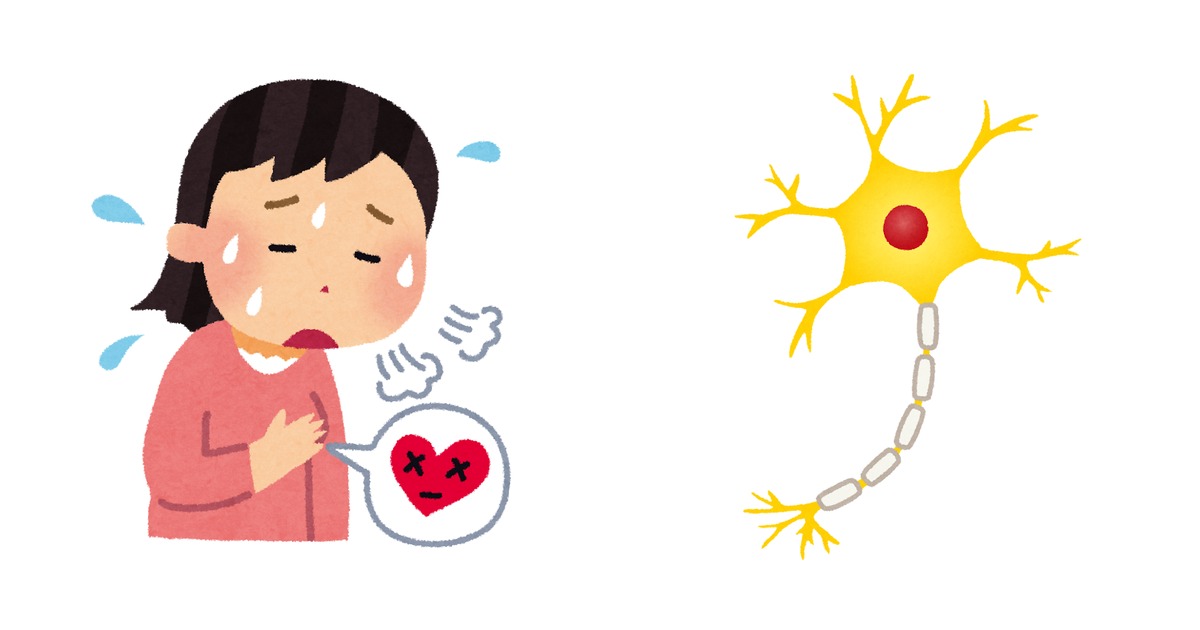
- Is Panic Disorder Genetic? What Twin Studies, Gene Scans and 23andMe Reports Really Show
- Key terms in plain English
- Panic attack vs. panic disorder: what the diagnosis actually requires
- How panic disorder runs in families: twin and family study evidence
- What GWAS has found so far: why there is still no “panic gene”
- Reading a 23andMe “Panic Attacks” polygenic report
- Evidence-based treatment in the US and Canada
- Getting care and coverage: screening, parity and provincial pathways
- Family implications: talking with siblings and children
- Privacy, discrimination and the emotional side of a genetic result
- FAQ
- Does a parent with panic disorder always pass it on to a child?
- Is there a single gene that causes panic attacks?
- Can a DNA test diagnose panic disorder?
- Can a genetic result affect health or life insurance in the US?
- Can an employer find out about a genetic result?
- How can someone tell a panic attack from a heart attack?
- Summary
- References
Is Panic Disorder Genetic? What Twin Studies, Gene Scans and 23andMe Reports Really Show
This article is for educational purposes only. It is not a substitute for diagnosis, treatment, or genetic counseling by a licensed health professional. In an emergency, call 911. If you have thoughts of suicide or self-harm, call or text 988 in the US or 9-8-8 in Canada.
My dad has had panic attacks for years. Now I keep wondering if I’m next.

That worry is very understandable. Family research shows panic disorder can run in families, but a family history is not destiny.
If a DNA report gives me a higher-likelihood result, can I even handle that?
That fear is completely normal. Nobody has to process a result alone, and a primary care clinician or genetic counselor can help put it in context.
My wife and I have two kids. Will they get this too?
Gene studies point to risk spread across many genes, so there is no single variant for relatives to test. This article explains what family history can and cannot tell you.
OK, so what do I actually do?
The sections ahead walk through the path from a primary care visit to therapy, medication and, if needed, genetic counseling. For possible heart attack symptoms, federal heart experts advise calling 911 first.
Bottom line: Panic disorder does run in families. A large review of twin studies found that genes explain about 43% of the differences in risk between people. But a large 2021 gene scan of panic disorder found no single gene that stands out. Risk comes from many small genetic and life factors. A family history or a DNA report is a reason to stay alert and seek help early. It is not a diagnosis, and it is not destiny.
What you’ll learn
- How doctors tell a single panic attack apart from panic disorder, and when chest pain needs 911
- What twin and family studies say about risk in parents, siblings and children
- Why gene scans have not found a “panic gene,” and what a 23andMe Panic Attacks report can and cannot tell you
- Which treatments work, how US and Canadian labels differ, and what insurance and the law protect
Key terms in plain English
Heritability, odds ratios, polygenic scores… I already feel lost.
That is a common reaction. In the twin and gene studies cited here, these terms describe groups and odds, not what will happen to one person.
Genetics research uses a lot of special words. This short list explains the ones used in this article. Each term is also explained the first time it shows up below.
| Term | Plain meaning |
|---|---|
| Heritability | The share of differences in risk between people that is linked to genes. |
| Twin heritability | Heritability estimated by comparing identical and non-identical twins. |
| SNP heritability | The share of risk explained by common DNA letter changes (SNPs) measured on a gene chip. |
| Odds ratio | A number that compares the odds of a condition in one group with another group. |
| GWAS | A genome-wide association study. It scans the DNA of many people to find spots linked to a trait. |
| Polygenic score | One number that adds up many small genetic effects. It estimates risk, not a diagnosis. |
| Confidence interval | A range of values that likely holds the true number. A wide range means less certainty. |
| Genetic counseling | A visit with a trained expert who explains what genetic results mean for you and your family. |
Heritability is a group number, not a personal one. A 43% figure does not mean 43% of one person’s panic comes from genes. It means genes account for about that share of the differences seen across a population.
Odds and risk are not the same thing. An odds ratio of 4 does not mean a person is four times as likely to get the condition. This matters later, when this article explains family risk.
So if panic disorder is 43% genetic, is 43% of my risk from genes?
No, the twin figure of 0.43 describes differences in risk between people, not your personal risk. If a report or visit uses these words, ask your doctor to explain them again.
If any of these terms come up in a test report or a clinic visit, it is fine to ask the clinician to explain them again. Good care includes clear answers.
Section recap: Heritability, odds ratios and polygenic scores describe groups and odds. None of them tells one person what will happen.
Panic attack vs. panic disorder: what the diagnosis actually requires
I had one awful attack at a mall last year. Do I have panic disorder?
NIMH says an isolated panic attack is not a mental disorder. Panic disorder means repeated, unexpected attacks plus at least a month of worry or avoidance.
A panic attack is a sudden wave of intense fear. It can bring a pounding heart and a sense of doom. Many people have one at some point. That alone is not a disorder.
The National Institute of Mental Health (NIMH) says panic disorder may be diagnosed when a person has repeated, unexpected panic attacks. In addition, for at least one month, the person worries about more attacks, fears what they mean, or changes behavior to avoid them. NIMH states that “an isolated panic attack is not a mental disorder”. It also notes that not everyone who has a panic attack will develop panic disorder.
How common is it?
NIMH reports data from a large US survey, the National Comorbidity Survey Replication.
| Measure (US adults) | Figure |
|---|---|
| Had panic disorder in the past year | 2.7% |
| Women, past year | 3.8% |
| Men, past year | 1.6% |
| Ever had it (lifetime) | 4.7% |
| Past-year cases with serious impairment | 44.8% |
| Teens 13-18, lifetime (separate teen survey) | 2.3% |
Put another way, about 5 in 100 US adults have panic disorder at some point in life. NIMH says it often begins in the late teens or early adulthood. Some people also develop agoraphobia. That is a fear of places where escape might feel hard, such as malls or buses.
Safety first: is it panic or the heart?
NIMH notes that the body signs of a panic attack can feel like a heart attack. It says a clinician may do a physical exam to make sure another health problem is not causing the symptoms. NIMH lists heart disease, breathing disorders and thyroid problems among conditions that can occur with panic disorder.
The National Heart, Lung, and Blood Institute (NHLBI) lists these possible heart attack symptoms:
- Chest pain, heaviness or discomfort in the center or left side of the chest (the most common sign)
- Pain or discomfort in the arms, back, shoulders, neck, jaw or above the belly button
- Shortness of breath
- Sweating a lot for no reason
- Unusual tiredness
- Nausea and vomiting
- Light-headedness or sudden dizziness
- Rapid or irregular heartbeat
NHLBI adds that symptoms can start slowly, be mild, or come and go. They can also differ between men and women. NHLBI’s advice is plain: “Call 9-1-1 for emergency medical care, even if you are not sure that you’re having a heart attack”.
A first episode, or one that feels different from past ones, deserves a medical check. Think of it like a smoke alarm. It is wiser to check every alarm than to guess it is just burnt toast.
How do I know if it’s panic or my heart?
You should not have to guess: NHLBI advises calling 911 even if you are not sure it is a heart attack. A first episode, or one that feels different, deserves a check with your doctor.
Section recap: Panic disorder means repeated, unexpected attacks plus at least a month of worry or avoidance. Possible heart symptoms always come first: call 911 and let doctors sort it out.
How panic disorder runs in families: twin and family study evidence
Is my dad’s panic something he learned, or something in our genes?
The Hettema review concluded that genes largely explain why panic disorder clusters in families. The remaining risk came mainly from experiences unique to each person, not from a shared home.
Twin studies help split genes from home life. Identical twins share nearly all their DNA. Non-identical twins share about half. If identical twins match more often, genes likely play a part.
In 2001, Hettema and colleagues pooled twin and family studies of anxiety disorders. Their twin data gave a twin heritability of 0.43 for panic disorder. That means genes accounted for about 43% of the differences in risk across people. For comparison, the same review found 0.32 for generalized anxiety disorder.
What about relatives?
The same review looked at the first-degree relatives of people with an anxiety disorder. First-degree relatives are parents, siblings and children. Odds ratios for illness in these relatives “ranged from 4 to 6, depending on the disorder”. That range covers panic disorder, generalized anxiety, phobias and OCD together. The review abstract does not give one exact number for panic alone.
| What was measured | Result | What it means |
|---|---|---|
| Twin heritability, panic disorder | 0.43 | Genes explain about 43% of risk differences. |
| Odds ratio in first-degree relatives | About 4 to 6 | This range covers several anxiety disorders, panic included. |
| Rest of the risk | Mostly “nonshared environment” | Life events unique to each person matter a lot. |
Why this is not a forecast for one child
An odds ratio compares odds, not plain chances. It cannot be turned into “X out of 100 relatives” without more data. This article’s sources do not give a measured risk figure for relatives.
Still, one point helps put things in context. Lifetime panic disorder affects about 5 in 100 US adults. A raised risk on a base rate that low leaves most room for a good outcome. That is an inference, not a measured figure for families.
Hettema’s team found the rest of the risk came “primarily” from nonshared environment. That means experiences that differ even between siblings in the same home. The abstract does not name which experiences matter.
The review also concluded that for panic disorder, “genes largely explain this familial aggregation”. In plain words, the clustering in families is mostly genetic, not just learned. NIMH puts it more simply. Panic disorder “sometimes runs in families, but no one knows for sure why some family members have it while others don’t”.
Picture a recipe with many small spices. No single spice decides the taste. Genes work the same way here. Many small pieces add up, and life events stir the pot.
If relatives have higher odds, how likely is it my kids get it?
The Hettema odds ratios of 4 to 6 cover several anxiety disorders, and odds cannot be turned into a personal chance. A primary care doctor can review a written family history with you.
Anyone worried about family risk can bring a family history to a primary care visit. Writing down which relatives had panic attacks, and at what age, gives the clinician useful context.
Section recap: Twin studies tie about 43% of panic disorder risk to genes. Relatives have higher odds, but those odds cannot be turned into a personal forecast.
What GWAS has found so far: why there is still no “panic gene”
Has anyone found the actual panic gene yet?
Not yet. The largest panic-only gene scan at the time, by Forstner and colleagues in 2021, found no genome-wide significant locus.
A GWAS, or genome-wide association study, scans DNA from thousands of people. It looks for spots that are more common in people with a condition. Each spot found is called a locus. A spot counts as “genome-wide significant” only if the link is very strong.
The largest panic-only study
Forstner and colleagues ran the largest GWAS focused only on panic disorder at the time. It included 2,248 patients and 7,992 matched controls from four European countries. A follow-up sample added 2,408 more patients and 228,470 controls.
The headline result: “No genome-wide significant locus was identified”. The strongest signal fell short of the bar.
The study did find a clear genetic signal spread across the genome. Its SNP heritability for panic disorder was 28.0% to 34.2%. SNP heritability is the share of risk explained by common DNA changes on a gene chip. It is usually lower than twin heritability.
The study also found that panic disorder shares genetic roots with major depression, depressive symptoms and neuroticism. Neuroticism is a personality trait linked to worry and strong negative moods. A polygenic score built from the data explained up to 2.6% of the differences in risk. That is a real signal, but a small one.
A much bigger study of anxiety disorders as a group
In 2026, Strom and colleagues published a far larger GWAS. It is important to know what it studied. It pooled five anxiety disorders: generalized anxiety, panic disorder, social phobia, agoraphobia and specific phobia. So its findings apply to anxiety disorders as a group, not to panic disorder alone.
| Feature | Forstner 2021 | Strom 2026 |
|---|---|---|
| What was studied | Panic disorder only | Five anxiety disorders pooled |
| Cases | 2,248 (plus 2,408 in follow-up) | 122,341 |
| Controls | 7,992 (plus 228,470 in follow-up) | 729,881 |
| Genome-wide significant loci | None | 58 |
| Can it name panic-only genes? | No loci found | No, by design |
The pooled study found 58 independent genetic signals. Of these, 51 were confirmed in a separate sample of 23andMe customers who reported their own diagnosis. The results pointed to GABAergic neurons. These are brain cells that use GABA, a chemical that calms nerve signals. Genes highlighted in the pooled analysis included BTN3A2, NEGR1 and GABBR1.
These are anxiety-family genes, not panic genes. The authors say so directly. Pooling five diagnoses made it “impossible to pinpoint the genetic signals specific to any particular disorder”.
Two more details matter. First, the study’s authors include a 23andMe research team, and two authors work for 23andMe and hold company stock or options. The paper discloses this as a competing interest. Second, the polygenic score worked less well outside European ancestry. It explained 2.27% of risk differences in European ancestry, 1.94% in South Asian ancestry and 0.54% in African ancestry. That last figure was not clearly different from zero.
Brain scans cannot diagnose one person either
The 2026 ENIGMA-Anxiety study compared brain scans from 1,146 people with panic disorder and 3,778 people without it. Participants were aged 10 to 66 and came from 28 sites worldwide.
People with panic disorder had slightly thinner areas in parts of the outer brain. They also had slightly smaller thalamus and caudate regions, two deep brain areas. The effect sizes, measured as Cohen’s d, were 0.07 to 0.13. Cohen’s d shows how far apart two group averages are. A value near 0.1 is very small. The two groups overlap almost completely.
The paper itself does not judge whether scans can diagnose people. This article’s reading is that group gaps this small cannot sort one person into a box. A clinician, not a scan, makes the diagnosis.
But I read a 2026 study found 58 anxiety signals. Aren’t those panic genes?
No, the Strom study pooled five anxiety disorders, and its authors say it cannot pinpoint signals for any one disorder. Questions about gene studies are worth raising with your doctor.
For a wider view of anxiety genetics, see the related article Is Anxiety Genetic?. Questions about gene studies are also a good topic for a primary care or mental health visit.
Section recap: The panic-only GWAS found no single gene. A bigger pooled study found 58 anxiety signals, but none can be called a panic gene.
Reading a 23andMe “Panic Attacks” polygenic report
My 23andMe app just showed a Panic Attacks report. Should I worry?
That reaction is understandable. The company says its model includes more than 6,700 markers, and it also says the report is not a substitute for clinical diagnosis.
In June 2023, 23andMe released a Panic Attacks report for its 23andMe+ members. The company says its model “includes more than 6,700 genetic markers, as well as information on an individual’s ethnicity and birth sex”. That figure is the company’s own statement.
The report is built on a polygenic score. A polygenic score adds up many tiny genetic effects into one estimate. It is like a weather forecast. It can say rain is a bit more likely. It cannot say whether you will get wet on a given day.
What the report can and cannot do
| The report can | The report cannot |
|---|---|
| Give a rough estimate of likelihood for self-reported panic attacks | Diagnose panic disorder |
| Prompt a talk with a clinician | Rule panic disorder in or out |
| Reflect a mix of many small DNA effects | Point to a single “panic gene” |
| Add to family history | Replace a medical exam |
The company itself says the report “is not a substitute for clinical diagnosis and treatment”. Note also that the report is about panic attacks, as people reported them. Panic disorder is a clinical diagnosis with specific criteria.
Why ancestry matters
The pooled anxiety study drew its main sample from people of European ancestry. In that study, the score worked far less well in people of African ancestry. That finding is for anxiety disorders as a group. But it shows a general limit. A score may be less reliable for people whose ancestry is less studied.
How panic disorder is actually diagnosed
No DNA test, whether direct-to-consumer or clinical, diagnoses panic disorder. Diagnosis is clinical. NIMH explains that a provider talks with the patient about symptoms. The provider may also do a physical exam to rule out other causes.
Some families want help making sense of a report. Genetic counseling is a visit with a trained expert who explains results and family meaning. It is not routinely needed for a polygenic panic result. It can help with complex questions. In the US, genetic counselors are certified by the American Board of Genetic Counseling (ABGC). In Canada, they are certified by the Canadian Association of Genetic Counsellors (CAGC). The National Society of Genetic Counselors, a professional society, runs a public directory at NSGC.org.
Should I see a genetic counselor about my result?
It is not routinely needed for a polygenic panic result, but it can help with complex questions. Ask your primary care doctor, or look for an ABGC- or CAGC-certified counselor.
Section recap: A 23andMe Panic Attacks report is a rough estimate from many genetic markers. It is not a diagnosis, and a clinician should interpret any worry it raises.
Evidence-based treatment in the US and Canada
If it’s partly genetic, can therapy really help?
Panic disorder is treatable. A Cochrane review found CBT was the most studied talk therapy and often did better than others, though effects were small and evidence quality was low.
Panic disorder is treatable. Major guidelines agree on two main paths: talk therapy based on cognitive behavioral therapy (CBT), and certain antidepressants.
Talk therapy
CBT teaches people to notice and change fearful thoughts. It can include gentle, planned exposure to body sensations that feel scary. Over time, a racing heart starts to feel less like a threat.
A Cochrane review by Pompoli and colleagues compared talk therapies for panic disorder. It included 60 studies, with 54 studies and 3,021 patients in the main analysis. CBT was the most studied, with 32 studies. The authors found CBT “was often superior to other therapies, although the effect size was small”. They also wrote that there is “no high-quality, unequivocal evidence to support one psychological therapy over the others”. They rated the overall quality of evidence as low. Behavior therapy alone “did not appear to be a valid alternative to CBT as a first-line treatment”.
The WHO also recommends brief, structured help based on CBT ideas. It adds stress management and structured physical exercise.
Medicines: what the labels say
Drug labels show what a regulator has approved a medicine for. A guideline may still recommend a medicine its label does not cover. That use is called “off-label.” The table below shows label status for panic disorder.
| Medicine | US FDA label for panic disorder | Health Canada label for panic disorder |
|---|---|---|
| Sertraline (Zoloft) | Yes, approved July 8, 1997 | Yes |
| Paroxetine and paroxetine CR (Paxil, Paxil CR) | Yes, adults | Yes |
| Fluoxetine (Prozac) | Yes, acute treatment | No, off-label in Canada |
| Venlafaxine XR (Effexor XR) | Yes, adults | Yes |
| Alprazolam (Xanax) | Yes, adults | Yes |
| Clonazepam (Klonopin, sold as Rivotril in Canada) | Yes | No, off-label in Canada |
Only sertraline’s panic approval date was confirmed from an FDA approval letter. Dates for the other drugs are not listed here because they could not be confirmed. The FDA labels found for panic disorder cover only these drugs. No newer drug approved just for panic disorder was found.
In Canada, the Prozac monograph lists depression, bulimia and OCD, but not panic disorder. The Rivotril monograph lists seizure disorders only. So fluoxetine and clonazepam are off-label for panic in Canada.
What the Canadian guideline recommends
The 2014 Canadian anxiety guideline by Katzman and colleagues rates medicines for panic disorder.
- First-line: citalopram, escitalopram, fluoxetine, fluvoxamine, paroxetine, paroxetine CR, sertraline, venlafaxine XR
- Second-line: alprazolam, clomipramine, clonazepam, diazepam, imipramine, lorazepam, mirtazapine, reboxetine
- Not recommended: buspirone, propranolol, tiagabine, trazodone
This shows a gap between labels and guidelines. The guideline rates fluoxetine first-line and clonazepam second-line, even though neither is labeled for panic in Canada.
Where guidelines disagree: benzodiazepines
Benzodiazepines are fast-acting calming drugs, such as alprazolam and clonazepam. Guidelines do not agree on them.
- The WHO’s 2023 guidance “recommend[s] against the use of benzodiazepines” for adults with GAD or panic disorder. It allows them only for severe, acute anxiety, for a very short time of 3 to 7 days.
- The Canadian guideline lists alprazolam and clonazepam as second-line. It says these drugs “should usually be restricted to short-term” use, due to dependence, sedation and thinking problems.
- In the US, the FDA labels alprazolam and clonazepam for panic disorder.
The Xanax label carries a boxed warning. It covers risks with opioids, misuse and addiction, and dependence and withdrawal reactions. SSRIs (selective serotonin reuptake inhibitors) and SNRIs (serotonin-norepinephrine reuptake inhibitors) are two common types of antidepressant. Their labels, such as Zoloft’s, carry a boxed warning on suicidal thoughts and behaviors in children and young adults.
Never stop or change the dose of a benzodiazepine or antidepressant without your prescriber. Any change should be planned together. Report any adverse events, such as new mood changes, to the prescriber right away.
My sister in Toronto takes clonazepam. Is it even approved for panic there?
In Canada, fluoxetine and clonazepam are off-label for panic disorder, though the Canadian guideline rates clonazepam second-line. She should never change a dose alone and should report adverse events to her prescriber.
Do genes guide drug choice?
Right now, the genetic findings in this article do not guide which panic medicine to choose. Tests that look at how the body processes drugs are a separate topic, best discussed with a prescriber.
Section recap: CBT and certain antidepressants are the main treatments. Label status differs by country, and guidelines disagree on benzodiazepines, so talk with a prescriber.
Getting care and coverage: screening, parity and provincial pathways
Would my family doctor even ask about anxiety at a checkup?
In the US, the USPSTF recommends anxiety screening for adults, including pregnant and postpartum people, and youth 8 to 18. Evidence was insufficient for adults 65 and older, and screening is not a diagnosis.
Help often starts with a simple screening question at a routine visit.
Screening in the US
The US Preventive Services Task Force (USPSTF) makes screening advice for primary care.
| Group | USPSTF advice |
|---|---|
| Adults, including pregnant and postpartum people | Screen for anxiety disorders (grade B) |
| Adults 65 and older | Evidence is not enough to decide (I statement) |
| Children and teens 8 to 18 | Screen for anxiety (grade B) |
| Children 7 and younger | Evidence is not enough to decide (I statement) |
An “I statement” is not advice against screening. It means the evidence is too thin to weigh benefits and harms. The advice applies to people without a known diagnosis or obvious symptoms. A screening result is not a diagnosis. It is a signal to look more closely.
Coverage in the US
Under the Affordable Care Act, insurers cannot deny coverage for a pre-existing condition. A federal parity law, the Mental Health Parity and Addiction Equity Act, applies to mental health benefits in many plans. Rules under this law have changed in recent years. Ask the plan which therapists are in-network and whether video CBT is covered.
Coverage in Canada
Coverage differs by province and by workplace plan. In Ontario, the Ontario Structured Psychotherapy program offers free, publicly funded CBT-based care. It serves adults 18 and older with depression or anxiety, including unexpected panic attacks and agoraphobic fears. In other provinces, a family doctor can explain local options.
We’re in Ontario. Do we have to pay for CBT out of pocket?
The Ontario Structured Psychotherapy program offers free, publicly funded CBT-based care for adults 18 and older with depression or anxiety. Your family doctor can explain how to get started.
The care gap
Many people never get help. A WHO team notes that “as many as 75% of people with anxiety disorders do not receive any care globally”. Asking for help is a normal and wise step.
If you or someone you love has thoughts of suicide, call or text 988 in the US. In Canada, call or text 9-8-8. For a life-threatening emergency, call 911.
Section recap: US screening guidance covers adults and children, with gaps for some ages. Check plan or provincial coverage before starting therapy.
Family implications: talking with siblings and children
Can my kids get tested for the gene my dad passed down?
Cascade testing works for single-gene conditions, but the 2021 Forstner scan points to panic risk spread over many genes. There is no single variant for relatives to test.
For a single-gene condition, relatives can test for one known variant. That is called cascade testing. Panic disorder does not work that way. Its risk is polygenic, meaning spread over many genes. There is no single variant for relatives to test.
Instead, family history is the most useful marker. Knowing that a parent or sibling had panic disorder can help a family spot early signs. NIMH notes the condition often starts in the late teens or early adulthood. That makes high school and college a key window.
Practical steps for families
- Share family history with the child’s doctor in plain terms. For example, note which relatives had panic attacks and at what age.
- Learn the difference between a panic attack and panic disorder, so one scary episode is not read as a lifelong label.
- Teach that any chest pain or breathing trouble gets checked by a doctor first.
- Know that US screening advice covers children and teens 8 to 18.
- Treat sleep and exercise as helpful habits, not a cure. NIMH says such habits cannot replace treatment.
- Avoid blame. Genes and life events both play a part, and no one chooses their DNA.
Sharing a DNA report with relatives
A 23andMe result is a rough estimate, not a verdict. When sharing it, give context. Explain that it is based on many small markers and that the company says it is not a diagnosis. Relatives with no symptoms do not need to act on someone else’s report.
A pediatrician, family doctor or child mental health clinician can help a family decide whether a teen needs an assessment. They can also suggest age-appropriate support.
My oldest had a scary “I can’t breathe” moment. What should we do?
A first breathing or chest episode should be checked by a doctor, and severe or ongoing trouble means calling 911. NIMH notes panic disorder often begins in the late teens or early adulthood.
Section recap: There is no cascade test for panic disorder. Family history works best as an early-warning signal for a talk with a doctor.
Privacy, discrimination and the emotional side of a genetic result
Could a genetic result hurt my kids’ insurance someday?
In Canada, the Genetic Non-Discrimination Act bars anyone from requiring a genetic test or its results for services or contracts. In the US, GINA covers health insurance and employers with 15+ workers, not life or disability insurance.
A genetic result can raise practical fears about insurance and jobs. It can also raise quieter fears about the future.
Legal protections
| Area | United States (GINA, 2008) | Canada (GNDA, 2017) |
|---|---|---|
| Health insurance | Protected | No one can require a genetic test for a contract |
| Employment | Protected (employers with 15 or more workers) | No one can require a genetic test for a contract |
| Life, disability, long-term care insurance | Not covered by GINA | No one can require a genetic test for a contract |
| Family history | Counts as genetic information | Not specified in this source |
In the US, the Genetic Information Nondiscrimination Act (GINA) bans genetic discrimination in health insurance and employment. “Genetic information” includes family medical history. GINA does not cover life, disability or long-term care insurance. Some states add their own protections. GINA does not apply to employers with fewer than 15 workers, and it has military exceptions.
In Canada, the Genetic Non-Discrimination Act became law on May 4, 2017. It bans anyone from requiring a genetic test, or test results, as a condition of goods, services or a contract. The Supreme Court of Canada upheld the law on July 10, 2020, in a 5-4 decision.
23andMe data and ownership
In July 2025, TTAM Research Institute completed its purchase of 23andMe’s consumer and research services. TTAM is a California nonprofit founded and led by Anne Wojcicki. The sale took place under US bankruptcy law. TTAM states that customers can change their research choices. Anyone unsure about their data can review account settings or contact the company directly.
The “genes equal destiny” trap
How people think about genes can shape how they feel. A meta-analysis by Kvaale and colleagues pooled 28 experiments on mental health problems in general. Biological or genetic explanations reduced blame. But they also raised prognostic pessimism, the belief that a person will not get better. The authors warned this could “set the stage for self-fulfilling prophecies that could hamper recovery”. This study was not about panic disorder alone.
The hopeful truth is that genes are not a sentence. Effective treatments exist for panic disorder. Many people improve with care.
If a result causes stress, talk with a primary care clinician or a mental health professional. Strong feelings after a test are common and worth sharing.
Honestly, hearing it’s genetic makes me feel stuck. Is that normal?
A Kvaale meta-analysis found genetic explanations of mental health problems can raise pessimism about recovery, yet effective panic treatments exist. If a result causes stress, talk with your primary care clinician.
Section recap: GINA and Canada’s GNDA give real but limited protection. A genetic link does not mean panic disorder cannot be treated.
FAQ
Does a parent with panic disorder always pass it on to a child?
No. Twin studies tie about 43% of risk differences to genes. The rest comes mostly from life experiences unique to each person. Relatives have higher odds, but a higher chance is not a certainty. A family doctor can help watch for early signs.
Is there a single gene that causes panic attacks?
No. A large 2021 panic-only gene scan found no genome-wide significant locus. A bigger 2026 study found 58 signals, but it pooled five anxiety disorders. Its authors say it cannot pinpoint signals for any one disorder.
Can a DNA test diagnose panic disorder?
No. Diagnosis is clinical. A provider asks about symptoms and may do a physical exam to rule out other causes. 23andMe itself says its report is not a substitute for clinical diagnosis and treatment.
Can a genetic result affect health or life insurance in the US?
GINA protects against genetic discrimination in health insurance. It does not cover life, disability or long-term care insurance. Some states add extra protections. In Canada, the GNDA bans required genetic testing for contracts and services.
Can an employer find out about a genetic result?
In the US, GINA bans genetic discrimination by employers with 15 or more workers. Family medical history counts as genetic information under GINA. In Canada, no one can require a genetic test or its results as a contract condition.
How can someone tell a panic attack from a heart attack?
It is not safe to guess. NHLBI says to call 9-1-1 “even if you are not sure that you’re having a heart attack”. Doctors can rule out heart, thyroid and lung problems.
Summary
- Panic disorder means repeated, unexpected panic attacks plus at least a month of worry or avoidance.
- About 5 in 100 US adults have it at some point in life.
- Twin studies tie about 43% of risk differences to genes.
- The largest panic-only GWAS found no single gene, only a spread-out signal.
- The 2026 pooled study found 58 anxiety signals, not panic genes.
- Brain scan differences are very small at the group level.
- A 23andMe Panic Attacks report is an estimate, not a diagnosis.
- CBT and certain antidepressants are core treatments.
- Fluoxetine and clonazepam are labeled for panic in the US but off-label in Canada.
- Guidelines disagree on benzodiazepines.
- GINA and Canada’s GNDA offer real but limited legal protection.
Learn more in the Neurogenetic Diseases category.
This article is for educational purposes only. It is not a substitute for diagnosis, treatment, or genetic counseling by a licensed health professional. In an emergency, call 911. If you have thoughts of suicide or self-harm, call or text 988 in the US or 9-8-8 in Canada.
References
- National Institute of Mental Health. Panic Disorder: When Fear Overwhelms (revised 2025). https://www.nimh.nih.gov/health/publications/panic-disorder-when-fear-overwhelms
- National Institute of Mental Health. Panic Disorder statistics. https://www.nimh.nih.gov/health/statistics/panic-disorder
- Hettema JM, Neale MC, Kendler KS. A review and meta-analysis of the genetic epidemiology of anxiety disorders. Am J Psychiatry. 2001;158(10):1568-1578. https://pubmed.ncbi.nlm.nih.gov/11578982/
- Forstner AJ, et al. Genome-wide association study of panic disorder reveals genetic overlap with neuroticism and depression. Mol Psychiatry. 2021;26(8):4179-4190. https://pubmed.ncbi.nlm.nih.gov/31712720/
- Strom NI, et al. Genome-wide association study of major anxiety disorders in 122,341 European-ancestry cases identifies 58 loci and highlights GABAergic signaling. Nat Genet. 2026;58(2):275-288. https://www.nature.com/articles/s41588-025-02485-8
- Han LKM, Bruin WB, et al. Structural brain differences associated with panic disorder: an ENIGMA-Anxiety Working Group mega-analysis of 4924 individuals worldwide. Mol Psychiatry. 2026;31(5):2402-2417. https://pubmed.ncbi.nlm.nih.gov/41530384/
- US Food and Drug Administration. Zoloft (sertraline) NDA 19-839/S-011 approval letter, 1997. https://www.accessdata.fda.gov/drugsatfda_docs/nda/97/019839_s011ap.pdf
- DailyMed (US National Library of Medicine). Zoloft (sertraline) prescribing information. https://dailymed.nlm.nih.gov/dailymed/lookup.cfm?setid=fda754f6-d0f3-4dce-a17a-927d64f912f7
- Health Canada. Drug Product Database. https://health-products.canada.ca/dpd-bdpp/
- Health Canada product monograph. Prozac (fluoxetine). https://pdf.hres.ca/dpd_pm/00074396.PDF
- Health Canada product monograph. Rivotril (clonazepam). https://pdf.hres.ca/dpd_pm/00065630.PDF
- Katzman MA, et al. Canadian clinical practice guidelines for the management of anxiety, posttraumatic stress and obsessive-compulsive disorders. BMC Psychiatry. 2014;14(Suppl 1):S1. https://pubmed.ncbi.nlm.nih.gov/25081580/
- Pompoli A, et al. Psychological therapies for panic disorder with or without agoraphobia in adults: a network meta-analysis. Cochrane Database Syst Rev. 2016;4:CD011004. https://pubmed.ncbi.nlm.nih.gov/27071857/
- Gray B, et al. Management of generalized anxiety disorder and panic disorder in general health care settings: new WHO recommendations. World Psychiatry. 2024;23(1):160-161. https://pubmed.ncbi.nlm.nih.gov/38214633/
- US Preventive Services Task Force. Screening for anxiety disorders in adults. JAMA. 2023;329(24):2163-2170. https://pubmed.ncbi.nlm.nih.gov/37338866/
- US Preventive Services Task Force. Screening for anxiety in children and adolescents. JAMA. 2022;328(14):1438-1444. https://pubmed.ncbi.nlm.nih.gov/36219403/
- National Heart, Lung, and Blood Institute. Heart Attack: Symptoms. https://www.nhlbi.nih.gov/health/heart-attack/symptoms
- National Human Genome Research Institute. Genetic Discrimination. https://www.genome.gov/about-genomics/policy-issues/Genetic-Discrimination
- Government of Canada, Justice Laws Website. Genetic Non-Discrimination Act, S.C. 2017, c. 3. https://laws-lois.justice.gc.ca/eng/acts/G-2.5/page-1.html
- Supreme Court of Canada. Reference re Genetic Non-Discrimination Act, 2020 SCC 17. https://www.scc-csc.gc.ca/judgments-jugements/cb/2020/38478
- Kvaale EP, Haslam N, Gottdiener WH. A meta-analytic review of how biogenetic explanations affect stigma. Clin Psychol Rev. 2013;33(6):782-794. https://pubmed.ncbi.nlm.nih.gov/23831861/
- 23andMe. 23andMe releases new report revealing genetic likelihood of experiencing panic attacks (press release, 2023). https://www.23andme.org/media-center/press-releases/23andme-releases-new-report-revealing-genetic-likelihood/
- 23andMe. 23andMe releases a Panic Attacks report (blog, 2023). https://www.23andme.org/blog/articles/23andme-releases-a-panic-attacks-report/
- TTAM Research Institute. TTAM Research Institute completes the acquisition of 23andMe assets (press release, July 14, 2025). https://www.23andme.org/media-center/press-releases/ttam-research-institute-nonprofit-public-benefit-corporation/
Last updated: 2026-10-21
Author: Yu Mizuno (Editor-in-Chief, non-physician), GeneLumen editorial team. This article aggregates 14 sources (tier 1=7 / tier 2=6 / tier 4=1). They include NIMH, NHLBI, NHGRI, the US FDA, Health Canada, the WHO, the USPSTF, a Cochrane review and PubMed-indexed studies.
This article is for educational purposes only. It is not a substitute for diagnosis, treatment, or genetic counseling by a licensed health professional. In an emergency, call 911 (US and Canada).
Related: Neurogenetic Diseases category
🇯🇵 For readers in Japan — a separate Japanese edition written for Japan’s healthcare system (not a translation): https://genelumen.com/ja/ja-neurogenetic/panic-disorder-genetic-risk-ja