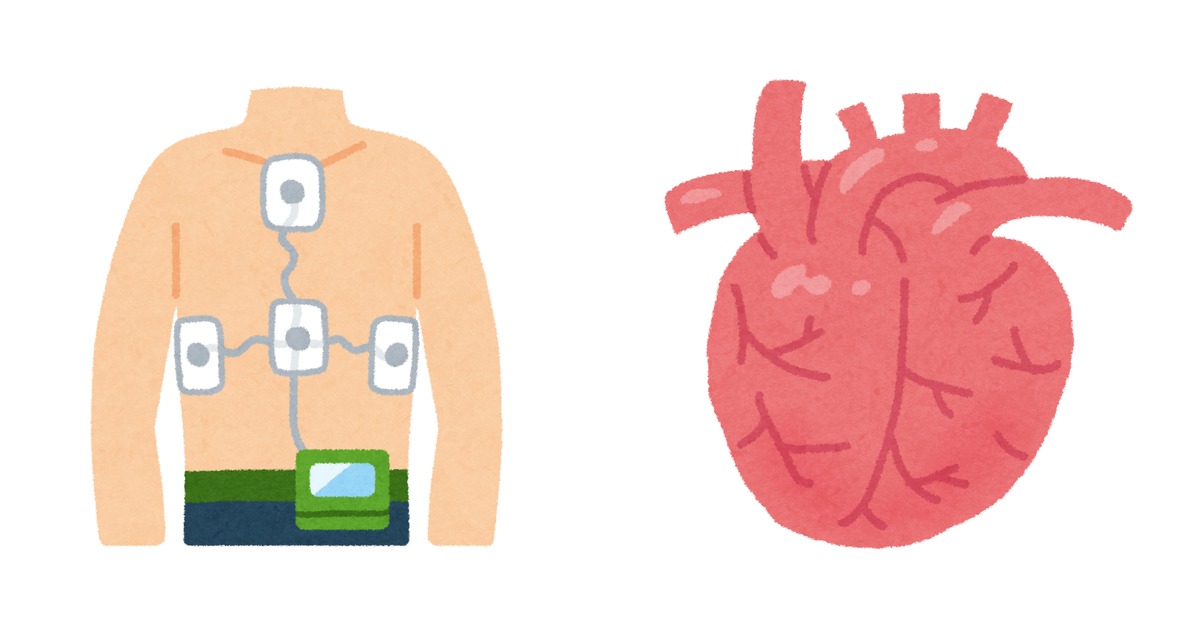
- Is AFib Hereditary? What a Polygenic Risk Score Really Predicts, and What the 2025 Genome Study Changed
- Atrial fibrillation is polygenic, so there is no single AFib gene to inherit
- What “increased likelihood” is worth in real numbers
- The rare exception: very early onset AFib and TTN
- Testing in the US and Canada: three tiers, and the one that matters most
- What a high score does not change, and why screening guidance is unsettled
- The part that is actually modifiable, and the trials behind it
- A smartwatch alert in 2026, and what regulators have cleared
- Family, disclosure, and the law in the US and Canada
- Frequently asked questions
- Summary
- References
Is AFib Hereditary? What a Polygenic Risk Score Really Predicts, and What the 2025 Genome Study Changed
This article is for educational purposes only. It is not a substitute for advice from a licensed physician, board-certified medical geneticist, or board-certified genetic counselor. For any decisions about testing, treatment, or care, consult a qualified clinician. In emergencies, call 911.

My dad had a stroke, and the cardiologist said AFib nobody had caught was behind it. I keep wondering if I am next.

That worry brings a lot of people into a genetics clinic, and it is a fair one. Family history does matter here, but the research describes this condition as many small genetic effects added together, never one inherited fault.
A consumer report flagged me. Honestly, part of me wishes I had never opened it.
That hesitation is common and worth respecting. Genetic testing generally shows neutral to mild psychological impact when results are delivered alongside counseling, which is why counseling belongs inside the process rather than bolted on afterwards.
My wife and I have two kids. Did I hand something down to them?
A fair question, and the answer depends entirely on what kind of test found what. Offering relatives a test for one identified variant, called cascade testing, is well established in the guidelines, and this article works through where it applies.
So what do I actually do with a percentile? Nobody has told me that part.
That is the right place to end up. What follows sets out what the numbers are worth, what the guidelines actually recommend, and when a primary care physician or a board-certified genetic counselor should be brought in.
Bottom line: Atrial fibrillation, or AFib for short, runs in families, but it is not passed down like a single-gene disease. In March 2025 the largest AFib genome study yet, covering 181,446 cases and 1,468,899 controls, mapped 354 risk regions. A consumer score adds up hundreds of those tiny effects. It is not a diagnosis. The baseline is already high: the 2023 professional guideline puts lifetime risk at about 30 to 40 percent in White adults. In the Framingham Heart Study, lifetime risk after age 55 ran from 22.3 to 48.2 percent. People with high genetic risk and the lowest clinical risk factor burden still carried 43.6 percent. Clean living did not cancel genetic risk. What it tracked with was later onset, a gap of roughly seven years. No guideline today uses a polygenic score to decide screening, blood thinners, or ablation, a procedure that scars small patches of heart tissue so they stop sending faulty signals.
What you’ll learn
- What “increased likelihood” is worth in people, against a baseline lifetime risk of 30 to 40 percent
- Why the honest payoff of risk factor control is delay and lower burden, not erased risk
- The one situation where a real, clinician-ordered gene test is warranted, and the age that triggers it
- What the US gene-discrimination law leaves unprotected, and how Canada’s law differs
Atrial fibrillation is polygenic, so there is no single AFib gene to inherit
So there is no single AFib gene I could have inherited from my dad? That is not how I pictured it.
That picture is the usual one, and it does not fit here. A nationwide family study covering everyone enrolled in Taiwan’s insurance system traced about 19.9 percent of the variation in who develops AFib to genes, not to one faulty copy.
Atrial fibrillation is a fast, jumbled rhythm in the upper chambers of the heart. Those chambers are the atria. Instead of squeezing in order, they quiver. The short name is AFib, and this article uses it from here on.
The genetic part is real, and it has been measured. One family study covered all 23,422,955 people signed up to Taiwan’s national insurance system. About 19.9 percent of the spread in who gets AFib traced to genes. Shared home life explained 3.5 percent, and everything else explained 76.6 percent.
That is heritable. It is not Mendelian. Mendelian would mean one faulty gene copy drives it alone.
What the 2025 genome study actually found
In March 2025 a pooled study combined 68 sets of results from more than 40 groups of patients. It covered 181,446 cases of AFib and 1,468,899 controls.
The study found 354 linked regions of the genome, each at a minor allele frequency of at least 1 percent. That phrase means the rarer version of the DNA letter turns up in at least 1 in 100 people. Of those regions, 135 sat more than a million DNA letters away from any known signal. That roughly doubled the list.
Researchers then narrowed each region down to the genes most likely to be doing the work, at 139 of them. The biology sorted into three themes: how heart muscle squeezes, how heart muscle is built, and how cells talk to each other. Lab work in stem-cell-grown atrial heart cells showed the flagged spots sit in stretches of DNA that those cells hold open and switch on.
The updated polygenic risk score built from that work holds about 1.1 million variants.
Why there is no carrier state and no 50 percent figure
Think of a credit score, not a missing document. One late payment does not set the number. Hundreds of small entries add up to a percentile.
For polygenic AFib, three things follow, and they hold for the rest of this article.
- There is no carrier state. A carrier is someone who has one copy of a faulty gene but is not ill from it. That idea needs a single faulty gene, and AFib risk does not work that way.
- There is no Punnett square. That is the school-biology grid used to work out how one gene passes to a child. Hundreds of small variants cannot be drawn on a grid.
- There is no 25 or 50 percent transmission figure to quote. No number of that kind exists for polygenic AFib.
Single-gene forms of AFib do exist, and they are rare. The National Library of Medicine lists ABCC9, KCNH2, KCNJ2, KCNQ1, LMNA, PRKAG2, RYR2 and SCN5A among the genes tied to familial AFib. That agency states plainly that cases caused by a single faulty gene are only a small share of all cases.
An international expert consensus statement frames the two ends as one scale. Common small-effect variants can change how strongly a rare Mendelian fault shows up in the person who carries it.
Then what do I even ask about? I cannot hand a doctor a percentile and expect much.
Bring the report and the family history together. The National Library of Medicine lists single-gene familial AFib as only a small share of cases, so a primary care physician or a board-certified genetic counselor should read that percentile against real relatives and ages.
A printout is not a clinical picture. A primary care physician or a board-certified genetic counselor should read any report against a real family history.
Section recap: AFib runs in families to a real degree, with about 19.9 percent of the spread traced to genes in a nationwide family study. The 2025 pooled study of 181,446 cases mapped 354 risk regions and named the likely genes at 139 of them. Single-gene family forms exist but make up only a small share of cases.
What “increased likelihood” is worth in real numbers
The report says increased likelihood. Increased from what? I have no idea what normal even looks like.
That is exactly the right question, and the baseline surprises most people. The 2023 professional guideline puts lifetime risk of AFib at about 30 to 40 percent in White adults, about 20 percent in African American adults and about 15 percent in Chinese adults.
Start with the baseline, because the baseline is the surprise. The 2023 professional guideline gives three figures for lifetime risk. It is about 30 to 40 percent in White adults, about 20 percent in African American adults, and about 15 percent in Chinese adults.
So a raised score shifts an already high number. It does not move a person from rare to likely.
The public health picture matches: the Centers for Disease Control and Prevention estimates 12.1 million people in the United States will have AFib by 2050.
The Framingham numbers, stratum by stratum
The most useful table in this field comes from the Framingham Heart Study. Researchers followed 4,606 people free of AFib at age 55, and 580 got it over a median of 9.4 years. They built a polygenic score from about a thousand variants, then sorted people into thirds on both genes and clinical risk factors.
Residual lifetime risk after age 55 was 37.1 percent overall.
| Group at index age 55 | Lifetime risk of AFib |
|---|---|
| Lowest genetic third and lowest clinical third | 22.3 percent (95% CI 15.4 to 29.1) |
| Highest genetic third, lowest clinical third | 43.6 percent (95% CI 35.6 to 51.6) |
| Highest genetic third and highest clinical third | 48.2 percent (95% CI 41.3 to 55.1) |
| Highest genetic third, all clinical groups | 46.9 percent (95% CI 42.7 to 51.2) |
| Lowest genetic third, all clinical groups | 25.8 percent (95% CI 21.8 to 29.9) |
| Highest clinical third, all genetic groups | 43.1 percent (95% CI 38.9 to 47.3) |
| Lowest clinical third, all genetic groups | 32.6 percent (95% CI 28.2 to 37.0) |
“95% CI” in that table stands for confidence interval. It is the range the true figure is very likely to sit in.
Read the second row twice. High genetic risk with the lowest clinical burden still meant 43.6 in 100. The authors wrote: “the lifetime risk of atrial fibrillation in individuals with high genetic predisposition was substantial, even when the clinical risk factor burden was low”.
In this group the genetic spread was the wider one. It ran 21.1 percentage points, against 10.5 points for the clinical spread.
The family history number
Having a first-degree relative with AFib raises risk by about 1.92 times, measured across a whole national population. A US study landed close, with an adjusted odds ratio of 1.85 for the children of a parent with AFib. An odds ratio is just another way of saying how much more likely something is. That figure rose to 3.23 when both generations were under 75.
A doubling sounds decisive. It predicts less than expected. Adding early family history to the standard risk factors moved a prediction score only from 0.842 to 0.846. Scores of that kind run from 0.5, a coin flip, to 1.0, a perfect call. So a step of 0.004 is close to nothing.
The score is also silent on three things.
- It cannot say when AFib would start.
- It cannot say whether the rhythm would come and go or settle in for good.
- It cannot say whether a stroke will follow.
My dad had it, so my risk is doubled. Does that not settle things?
It sounds decisive and predicts less than you would expect. Adding early family history to the standard risk factors moved a prediction score only from 0.842 to 0.846, which is why that figure belongs in a conversation with a primary care physician.
Any number here belongs in a talk with a primary care physician, not in a private sum at a kitchen table.
Section recap: Lifetime risk of AFib is 30 to 40 percent in White adults before any score is involved. Framingham groups run from 22.3 percent to 48.2 percent, and high genetic risk with low clinical burden still carried 43.6 percent. A first-degree relative roughly doubles risk, yet adds very little to formal prediction.
The rare exception: very early onset AFib and TTN
So there is a real single-gene version after all. How would I know if that is my family?
Age of onset is the clearest signal. In whole-genome work on 2,781 early-onset cases, loss-of-function TTN variants appeared in 2.1 percent of cases against 1.1 percent of controls, and in 6.5 percent of those whose AFib began before age 30.
There is one place where single-gene inheritance genuinely applies, and it is worth knowing precisely.
Researchers read the whole genomes of 18,526 people, comparing 2,781 early-onset AFib cases against 4,959 controls. That study counted early onset as starting before age 66, and the average start age was 48.7 years.
Loss-of-function variants in TTN showed up in 2.1 percent of cases and 1.1 percent of controls, an odds ratio of 1.76. Loss-of-function, sometimes called truncating, means the change cuts the gene short so it cannot make a working protein. TTN is the gene for titin, a giant spring-like protein inside heart muscle.
The signal was much stronger in the youngest group. Among people whose AFib began before age 30, 6.5 percent carried such a variant, an odds ratio of 5.94. A separate group of 1,582 cases and 41,200 controls found the same link at an odds ratio of 2.16.
The authors added their own caution, and it belongs here: further research is needed to know whether the relationship is causal.
Why this matters beyond rhythm
Truncating TTN variants are the most common known genetic cause of dilated cardiomyopathy, a weakening and stretching of the heart muscle. So a finding like this reaches past the rhythm question.
That is the difference between a curiosity and a referral.
The red flags to carry to a clinician
The 2023 guideline supplies the age threshold. It covers patients whose AFib began before 45 years of age without obvious risk factors. For them, referral for genetic counseling, gene testing for rare harmful variants, and follow-up for heart muscle or rhythm disorders may be reasonable. That is a Class 2b recommendation, which signals modest confidence rather than an order.
An international consensus statement adds a testing menu for family cases. It says an analysis of SCN5A, KCNQ1, MYL4 and truncating TTN variants may be performed in the first patient found in a family. Familial AFib there means young onset, below age 60. That statement is graded as expert opinion, on purpose weaker than its advice for other heart conditions.
These are the practical signals worth raising at an appointment.
- AFib starting young, especially before age 30.
- AFib in several close relatives, not just one.
- A family history of cardiomyopathy, meaning disease of the heart muscle itself.
- Unexplained heart failure in the family.
- Pacemakers in young relatives.
- Sudden death with no known cause in the family.
Two relatives had it and one of them was young. Is that enough to ask for a panel?
It is enough to ask. The 2023 guideline says referral for genetic counseling and testing may be reasonable when AFib begins before age 45 without obvious risk factors, so raise those ages with a primary care physician or a cardiologist.
A polygenic score is not this test, and it cannot stand in for it. A calm consumer percentile does not rule any of this out. A cardiologist or a genetics clinic orders the real panel.
Section recap: Loss-of-function TTN variants were found in 2.1 percent of early-onset cases overall and 6.5 percent of those starting before age 30. The 2023 guideline flags onset before 45 without obvious risk factors as a possible reason to refer. A consumer polygenic score neither finds nor rules out these variants.
Testing in the US and Canada: three tiers, and the one that matters most
I already paid for a test. Why would I need another one?
Because these three products answer different questions. The 2023 guideline calls the use and value of consumer gene testing for AFib uncertain, while a clinician-ordered panel looks for rare single-gene faults and rhythm monitoring looks for the rhythm itself.
The word “test” covers three very different products. Telling them apart answers most practical questions.
| Kind of test | Who orders it | What it can tell you | What it cannot |
|---|---|---|---|
| Consumer polygenic report | You, online | Where your score sits next to other people’s | Whether you have AFib, or what to do next |
| Clinician-ordered gene panel | A cardiologist or genetics clinic | Whether a rare single-gene fault is present | Anything about common polygenic risk |
| Rhythm monitoring (ECG or patch) | A primary care physician or cardiologist | Whether AFib is happening in your heart | Anything about your genes |
Tier one: the direct-to-consumer polygenic report
This is the report that sends most readers looking. It sits in the health predisposition part of a consumer account, and it is built from research-grade scoring rather than a clinical lab test. According to the testing company’s own product materials, it is not a diagnostic test and is not meant to guide treatment. That framing comes from the company, not from a regulator, and it should be read that way. The 2023 guideline calls the use and value of consumer gene testing for AFib uncertain.
Tier two: clinician-ordered diagnostic panels
These are ordered by a cardiologist or a genetics clinic and run in accredited clinical labs. In the United States that means labs certified under the Clinical Laboratory Improvement Amendments. In Canada, testing is arranged through provincial genetics or inherited heart disease programs, with funding when a patient meets the criteria.
Access is gated by rules, not by wanting to know. The section above lists the rules clinicians actually apply. Coverage rules differ by plan and by province, and waiting lists are real, so ask about cost before the appointment rather than after.
Tier three: the test that beats both, which is not genetic
For most adults holding a risk score, the test that yields most is rhythm monitoring. A 12-lead electrocardiogram, or ECG, takes minutes. A wearable patch monitor records for days to weeks. Both can catch the rhythm itself, which no gene test can do.
The reason is simple math. AFib is found in under 0.2 percent of adults younger than 55 and in about 10 percent of those 85 or older. And about 20 percent of people who have an AFib-related stroke are first diagnosed at the time of that stroke.
Symptoms are the other free instrument. The CDC lists irregular heartbeat, a pounding or fluttering chest, lightheadedness, extreme fatigue, shortness of breath, and chest pain. It also notes that some people with AFib have no symptoms at all.
Think of it like a smoke alarm versus a fire-risk survey of the neighborhood. Both are useful. Only one tells a person what is happening tonight.
So a monitor first, not more DNA. Where does that start?
With a primary care physician, who can judge whether an ECG or a wearable patch fits your story. It matters because about 20 percent of people who have an AFib-related stroke are first diagnosed at the time of that stroke.
Any of these three routes starts with a primary care physician, who can decide which one fits the story.
Section recap: A consumer polygenic report is not a diagnostic test, and the 2023 guideline calls the whole consumer category uncertain in use. Clinician-ordered panels are gated by referral criteria and run in accredited labs. Rhythm monitoring still yields most, because 20 percent of AFib strokes arrive before any diagnosis.
What a high score does not change, and why screening guidance is unsettled
If my score is high, should somebody not be doing something about it now?
Understandable, and the honest answer is that it changes no decision yet. In the 2025 study the score lifted the prediction grade by 0.0152 and 0.026 on a scale running from 0.5 to 1.0, which is real and small.
Three points decide how much weight a percentile deserves.
It is probabilistic, not diagnostic
A percentile places a person on a curve. Many high-scoring people never get AFib, and many patients with AFib score in the middle. The 2025 study measured how much the score adds, and the gain is real but small. Researchers grade a model by how well it tells apart the people who go on to develop AFib from the people who do not. That grade runs from 0.5, a coin flip, to 1.0, a perfect call. In the best model, the score lifted that grade to 0.872 in one test group and 0.790 in another. Those were gains of 0.0152 and 0.026 over the same model without it.
To picture what a gain of 0.0152 buys, line up 100 random pairs of people, one who later gets AFib and one who does not. Adding the score puts one or two more of those pairs in the right order. That is a real edge, and a small one.
It was still enough to beat an established clinical risk score and the earlier polygenic score.
A percentile does not mean the same thing for every reader
This caveat carries a lot of weight. Among the cases in the 2025 study, 128,044 were of non-Finnish, non-Icelandic European ancestry, with 20,953 Icelandic and 17,325 Finnish cases added. East Asian cases numbered 11,350, mixed African or African American cases 1,782, Hispanic cases 1,203, Brazilian 571 and South Asian 218.
That is roughly 91 percent European ancestry. The score was checked in two mostly European groups, and the study reports no check split out by non-European ancestry.
So a percentile built mostly in one population is less sure in others. The guideline’s own risk figures by ancestry make the same point from another direction.
It changes no clinical decision today
The guideline says so in its own knowledge-gap section. Polygenic risk scores can point to higher risk of AFib. But whether gene testing changes how patients are watched, treated, or how they fare is still unsettled.
Here is what a high percentile does not move.
- It does not start blood thinners. Those are decided by measured stroke risk, not by genes. The guideline gives its strongest, Class 1 recommendation for blood thinners once the estimated yearly clot risk reaches 2 percent. That matches a CHA2DS2-VASc score of at least 2 in men and 3 in women. CHA2DS2-VASc is a short checklist of age, sex, blood pressure, diabetes, heart failure, prior stroke and blood vessel disease. A clinician works it out from the medical record and a confirmed AFib diagnosis. It is not a self-test to fill in at home, and it does not apply to anyone without that diagnosis. Aspirin used in place of blood thinners carries a Class 3 label, meaning harm.
- It does not order screening. No guideline uses a score to decide who gets tested for AFib.
- It does not choose a procedure. No AFib treatment, including ablation, is picked on the basis of genes.
My dad was on a blood thinner. Should I be asking about one too?
Not on the strength of a score. The guideline reserves its strongest recommendation for blood thinners for people with a confirmed diagnosis whose estimated yearly clot risk reaches 2 percent, worked out by a clinician, so that question belongs with your physician.
An expert consensus statement grades gene testing in AFib as neither a way to diagnose it nor a way to pick treatment, with only some value in judging outlook.
Screening is unsettled as well. In 2022 the US Preventive Services Task Force looked at screening adults 50 years or older who have no diagnosis and no symptoms. It found that current evidence is not enough to weigh the benefits against the harms, which it labels an “I statement”.
An “I statement” is not advice against screening. It is an admission that the trials do not yet answer the question. What it leaves a reader with is symptom awareness plus a talk with a clinician.
Section recap: The 2025 score improved prediction, but by only 0.0152 and 0.026 on a scale that runs from 0.5 to 1.0. About 91 percent of the cases studied were of European ancestry, with no reported check in non-European groups, so a percentile does not mean the same thing for everyone. No score changes blood thinner decisions, and the USPSTF calls the screening evidence not enough.
The part that is actually modifiable, and the trials behind it
The genes are fixed. Is there anything on my side of this at all?
Yes, and it is the larger lever. The 2023 guideline gives its strongest tier to weight loss of at least 10 percent above a body mass index of 27, to cutting or stopping alcohol, and to about 210 minutes of exercise a week.
The 2023 guideline sorted AFib into four stages. Put in ordinary words, the first stage covers people who have risk factors but no AFib at all. The second covers changes in the heart’s structure or wiring that make AFib more likely. The third covers diagnosed AFib, and the fourth covers cases where attempts to restore a normal rhythm have stopped.
That first stage is the important move for a reader holding a score. It gives someone with risk factors and no diagnosis a named place inside a cardiology guideline.
What the guideline recommends most strongly
Three lifestyle recommendations carry Class 1 status, the guideline’s strongest tier, for patients with AFib.
- Weight: for patients who are overweight or obese with a body mass index above 27, weight loss is recommended. The ideal target is at least 10 percent, to cut symptoms, burden, relapse and worsening.
- Alcohol: patients seeking to hold a normal rhythm should cut down or stop alcohol, to reduce relapse and burden.
- Exercise: moderate to hard training, with a target of 210 minutes per week.
Sleep apnea sits on purpose at a weaker tier, and this is where consumer pages overstate. The guideline says screening for obstructive sleep apnea may be reasonable, since it is so common. It adds that the role of treating sleep-related breathing trouble to hold a normal rhythm is uncertain. That is a Class 2b recommendation, not a pillar.
Blood pressure is worth its own line. The CDC estimates that high blood pressure alone accounts for about 1 in 5 cases of AFib.
The effect sizes, so this is not generic wellness copy
A long-term study put AFib patients with a body mass index of 27 or above through a guided weight-loss program. Of 1,415 patients in a row, 355 fit the entry rules and were grouped by how much weight they lost. Those losing 10 percent or more were 6 times as likely to stay free of the abnormal rhythm as the other two groups.
The same study found the catch. Weight that swung up and down by more than 5 percent doubled the risk of relapse. Steady loss, not a diet cycle, is what the data support. This was a follow-up study of one group, not a trial with a coin toss.
Alcohol was tested by a coin toss. A trial assigned 140 adults with AFib, all drinking at least 10 standard drinks a week, either to stop or to carry on. In the stopping arm, intake fell from 16.8 to 2.1 drinks per week. Over six months, AFib came back in 53 percent of those who stopped versus 73 percent of the rest, a hazard ratio of 0.55. A hazard ratio below 1 means the event came slower, or less often, in that arm. Median AFib burden, the share of time spent in the abnormal rhythm, was 0.5 percent versus 1.2 percent.
One limit matters. Both studies enrolled people who already had AFib and measured relapse and burden. The guideline’s Class 1 lifestyle advice is likewise written for patients with AFib. None of this is a measured prevention effect in a person holding only a risk score.
What the payoff honestly looks like
Return to Framingham for the math. A lighter clinical risk factor load went with a later start, once genetic risk was accounted for, with a gap of roughly seven years across the clinical risk thirds. That held inside each genetic third.
Seven years is worth having. It does not erase the risk. Genetic risk stayed high even with a clean clinical profile.
If I did all of that, would the risk actually go away?
It would not, and it is fairer to say so. In the Framingham data a lighter clinical risk factor load went with onset roughly seven years later, not erased risk, and which lever comes first is a question for your primary care physician.
Think of it as a slower fuse rather than a defused one. Which of these levers is worth pulling first, and in what order, is a question for a primary care physician who knows the whole chart.
Section recap: The 2023 guideline created a stage for people at risk with no diagnosis, and gives weight loss, cutting alcohol and exercise its strongest tier. Steady 10 percent weight loss went with a 6-fold better chance of staying free of the abnormal rhythm, and stopping alcohol cut relapse from 73 to 53 percent. In Framingham the measured payoff was about seven years later onset, not erased risk.
A smartwatch alert in 2026, and what regulators have cleared
My watch buzzed once at two in the morning months ago and never again. I ignored it.
Common, and worth not ignoring. In a study of 419,297 wearers with no known AFib, only 0.52 percent got an irregular pulse alert, and about 34 percent of those who then wore an ECG patch had AFib recorded on it.
What one notification actually means
A large smartwatch study enrolled 419,297 people without known AFib, followed for a median of 117 days.
| What the smartwatch study found | Figure |
|---|---|
| People enrolled, none with known AFib | 419,297 |
| Got an irregular-pulse alert | 2,161, or 0.52 percent |
| Alerted people who wore an ECG patch and had AFib on it | 34 percent |
| Alerts confirmed by an ECG worn at the time of a later alert | 84 out of 100 |
Read the last two rows together. Two-thirds of the 450 alerted people who returned a usable patch had no AFib caught on it. The 84-in-100 figure is a narrower test, counting only alerts checked by a patch that was already recording. Neither number describes a lone alert with no follow-up.
An alert is a reason to book an appointment and get a real ECG. It is not a diagnosis, and never a reason to start medication.
Why device-detected AFib is a genuine dilemma
A trial assigned 4,012 patients with device-detected AFib lasting 6 minutes to 24 hours to either apixaban, a blood thinner, or aspirin.
| Outcome, per 100 patients per year | Apixaban | Aspirin |
|---|---|---|
| Stroke or a clot blocking an artery | 0.78 | 1.24 |
| Major bleeding | 1.71 | 0.94 |
The hazard ratio was 0.63 for stroke and 1.80 for major bleeding. In plain terms, that is roughly 0.46 fewer strokes and 0.77 more major bleeds for every 100 patients treated for a year. Trading one harm for another is a clinician’s call.
So what does one alert actually mean? Do I call somebody?
Book an appointment and ask for a real ECG, because an alert is not a diagnosis and never a reason to start medication. Trial evidence on device-detected AFib traded fewer strokes for more major bleeding, which makes it a clinician’s call.
Finding it early is not futile
A trial of 2,789 patients diagnosed within the past year compared early rhythm control against usual care. It was stopped early for benefit after a median of 5.1 years, with 3.9 versus 5.0 main events per 100 patient-years and a hazard ratio of 0.79. Serious side effects from the rhythm treatment itself were more common, at 4.9 percent versus 1.4 percent.
Procedures and their regulatory status
The 2023 guideline gives catheter ablation its strongest recommendation as first-line treatment in selected patients. Those patients are generally younger, with few other conditions, and have paroxysmal AFib with symptoms, where a normal rhythm is the goal. Paroxysmal means the episodes start and stop on their own. A weaker recommendation covers first-line ablation in wider groups.
The newest approach is pulsed field ablation, which uses electrical fields rather than heat or cold. A trial assigned 305 patients to pulsed field ablation and 302 to standard heat or cold ablation. At one year the success target was met in 73.3 percent versus 71.3 percent, close enough to count as no worse. No worse does not mean better.
In the United States, the Food and Drug Administration issued its first market approval for the FARAPULSE pulsed field ablation system on 2024-01-30, under PMA number P230030. In Canada, Health Canada licensed the same system under Medical Device Licence 111047. That is a Class IV licence, with a first licence status date of 2024-04-04, and it remains in force. Canada licenses devices rather than approving them, and this record is listed as issued and conditional.
Available is not the same as suitable. No AFib treatment, drug or procedure, is chosen by a person’s genes, and no gene-targeted AFib drug exists. A cardiologist decides which of these applies to one person.
Section recap: Only 0.52 percent of 419,297 watch wearers got an alert, and 34 percent of those returning a patch had confirmed AFib. Giving blood thinners for device-detected AFib cut strokes and raised major bleeding, so the choice belongs to a clinician. Pulsed field ablation worked as well as heat or cold ablation and carries a 2024 FDA approval and a 2024 Health Canada licence.
Family, disclosure, and the law in the US and Canada
Do I tell my brother and my kids? And is there anything to test them for?
Tell them, and know there is nothing to cascade here. A first-degree relative, meaning a parent, sibling or child, with AFib carries about 1.92 times the risk, and that family history is the useful thing to pass on, not a percentile.
There is nothing to cascade
Cascade testing means offering relatives a test for the one variant found in a family member. It has no role for a polygenic score. The expert consensus statement saves variant-specific testing of family members for cases where a harmful variant has been found in the first patient tested.
What relatives can use instead is the family history itself. Having a first-degree relative with AFib raises risk by about 1.92 times. That figure is a relative risk, meaning risk compared with someone who has no such relative, not a chance of getting AFib. Up to 30 percent of people with AFib of no known cause have a family history of it.
The concrete script for a sibling or an adult child is short.
- Know your blood pressure.
- Watch weight and alcohol.
- Raise loud snoring or daytime sleepiness with a physician.
- Learn how to check a pulse.
Do not oversell it. The nationwide family study concluded that family history may not be particularly informative in the diagnosis or management of atrial fibrillation. Its most useful role is prompting a question about age of onset.
The one exception where a 50 percent figure applies
If a clinician-ordered panel finds a harmful variant in TTN, LMNA, or another heart muscle or rhythm gene, the situation changes. Family AFib of that kind follows an autosomal dominant pattern, meaning one altered copy in each cell is enough to cause the disorder. Each first-degree relative then has a 50 percent starting chance of carrying it.
That work belongs in a genetics clinic, with counseling before and after.
The law, split by country
| United States | Canada | |
|---|---|---|
| Law | Genetic Information Nondiscrimination Act of 2008 | Genetic Non-Discrimination Act, 2017 |
| What it covers | Health insurance, and hiring, firing, promotion, pay and job assignment | Any goods, services or contract, insurance included |
| What it does not cover | Life, disability and long-term care insurance | A documented AFib diagnosis, which is medical, not genetic |
| Extra reach | Some states go further, such as California’s 2011 law on housing, lending and education | Criminal penalties of up to a $1,000,000 fine or five years in prison |
In the United States, the law’s Title I covers private health insurers, Medicare, Medicaid, the Federal Employees Health Benefits program and the Veterans Health Administration. Title II applies to employers with 15 or more staff.
Now the gap that matters most to anyone about to apply for a policy. Those health insurance protections do not reach long-term care, life, or disability insurance.
Canada took a different route. The Genetic Non-Discrimination Act makes it an offence to require a person to take a genetic test. A matching section bars requiring someone to hand over the results. Both apply as a condition of goods, services or a contract, and refusing to deal with a person who says no is barred as well. The Supreme Court of Canada upheld the Act as valid criminal law in a 5-4 decision released on 2020-07-10.
I am applying for a term life policy next month. Does any of this go on the form?
That gap is real and worth raising before you sign. The US law covers health insurance and jobs but not life, disability or long-term care cover, while Canada’s Act bars requiring a test or its results. A genetic counselor can talk it through.
The caveat that applies in both countries
A documented AFib diagnosis is medical information, not genetic information. Neither law shields it. That difference is worth grasping before deciding what to write down and when.
Finally, name the emotional part. A percentile can stir up worry far beyond what it predicts, which is itself a reason to talk to someone trained in it. In the United States, the National Society of Genetic Counselors keeps a public directory at findageneticcounselor.nsgc.org. In Canada, the Canadian Association of Genetic Counsellors offers a matching directory.
Section recap: There is no cascade testing for a polygenic score, so the family history is the useful currency. A confirmed harmful heart muscle or rhythm variant is different, following an autosomal dominant pattern at 50 percent per relative. The US law leaves out life, disability and long-term care insurance, while Canada’s law bars requiring a test or its results as a contract condition.
Frequently asked questions
Will I get AFib?
Nobody can say. Lifetime risk is already about 30 to 40 percent in White adults before any score is considered. In Framingham, people in the highest genetic third carried 46.9 percent lifetime risk after age 55, and those in the lowest third carried 25.8 percent. Many high-scoring people never get it. A primary care physician can set those numbers against one real medical history.
Will my children inherit it?
Children inherit half of each parent’s variants, so part of a polygenic risk is passed on. There is no 25 or 50 percent figure to quote, and nothing to test them for. A first-degree relative with AFib raises risk by about 1.92 times, which is the number worth sharing. The exception is a confirmed harmful variant on a clinical panel, which follows an autosomal dominant pattern and belongs in a genetics clinic.
Will this affect my health or life insurance?
In the United States, health insurance is protected. The Genetic Information Nondiscrimination Act bars health insurers from using genetic information, and covers Medicare, Medicaid and federal employee plans. Life, disability and long-term care insurance sit outside those protections. In Canada, the Genetic Non-Discrimination Act bars requiring a test or its results as a condition of a contract, insurance included. In both countries, a documented AFib diagnosis is medical information and is not shielded by either law.
Can my employer find out?
In the United States, the law bars employers with 15 or more staff from using genetic information in job decisions. In Canada, the federal law bars requiring a genetic test, or the handing over of results, as a condition of a contract or service. Criminal penalties apply, and written consent is required before results are collected, used or shared. Job questions belong with an employment lawyer, not a health article.
Should I get a second opinion, or a better test?
For most adults, the better test is not genetic. Rhythm monitoring with an ECG or a wearable patch is what catches AFib, and about 20 percent of AFib strokes happen in people not yet diagnosed. A clinician-ordered gene panel is warranted for onset before 45 without obvious risk factors, or when AFib runs in the family. A cardiologist or a board-certified genetic counselor decides which applies.
Section recap: A raised score shifts an already high baseline and settles nothing. There is nothing for children to be tested for unless a harmful variant is confirmed on a clinical panel. US law protects health insurance and jobs but not life, disability or long-term care cover, while Canada’s law reaches contracts in general.
Summary
AFib really does run in families, and the 2025 pooled study of 181,446 cases settled that with 354 mapped risk regions. A consumer polygenic score measures something real. It does not measure something decisive.
Three points carry most of the practical weight.
- The baseline is high on its own, at 30 to 40 percent lifetime risk in White adults, and the Framingham groups run from 22.3 to 48.2 percent. High genetic risk with the lowest clinical burden still meant 43.6 percent.
- Risk factor control is worth doing, and its honest payoff is delay and lower burden. Framingham measured a gap of about seven years in onset, and the weight and alcohol evidence came from people who already had AFib.
- No polygenic score today changes screening, blood thinner or ablation decisions, and the screening question itself is unsettled.
The most useful next step is not a second gene test. It is an appointment with a primary care physician, carrying the report, the family history with ages of onset, and any symptom or device alert. If AFib began young in the family, ask about referral for genetic counseling and a heart muscle and rhythm gene panel.
This article is for educational purposes only. It is not a substitute for advice from a licensed physician, board-certified medical geneticist, or board-certified genetic counselor. For any decisions about testing, treatment, or care, consult a qualified clinician. In emergencies, call 911.
References
- Roselli C, Surakka I, Olesen MS, et al. (2025). Meta-analysis of genome-wide associations and polygenic risk prediction for atrial fibrillation in more than 180,000 cases. Nature Genetics 57(3):539-547 (6 March 2025). DOI 10.1038/s41588-024-02072-3. PMID 40050429. PMCID PMC12094172. https://pubmed.ncbi.nlm.nih.gov/40050429/
- Joglar JA, Chung MK, Armbruster AL, et al. (2024). 2023 ACC/AHA/ACCP/HRS Guideline for the Diagnosis and Management of Atrial Fibrillation. Circulation 149(1):e1-e156 (released 30 November 2023). DOI 10.1161/CIR.0000000000001193. PMID 38033089. PMCID PMC11095842. https://pubmed.ncbi.nlm.nih.gov/38033089/
- Weng LC, Preis SR, Hulme OL, et al. (2018). Genetic Predisposition, Clinical Risk Factor Burden, and Lifetime Risk of Atrial Fibrillation. Circulation 137(10):1027-1038 (6 March 2018). Framingham Heart Study. DOI 10.1161/CIRCULATIONAHA.117.031431. PMID 29129827. PMCID PMC5840011. https://pubmed.ncbi.nlm.nih.gov/29129827/
- Choi SH, Weng LC, Roselli C, et al. (2018). Association Between Titin Loss-of-Function Variants and Early-Onset Atrial Fibrillation. JAMA 320(22):2354-2364 (11 December 2018). DOI 10.1001/jama.2018.18179. PMID 30535219. PMCID PMC6436530. https://pubmed.ncbi.nlm.nih.gov/30535219/
- Wilde AAM, Semsarian C, Marquez MF, et al. (2022). EHRA/HRS/APHRS/LAHRS Expert Consensus Statement on the State of Genetic Testing for Cardiac Diseases. Heart Rhythm 19(7):e1-e60 (July 2022). Corrigendum Europace 2022;24(8):1367. Open-access reprint J Arrhythm 2022;38(4):491-553, PMCID PMC9347209. DOI 10.1016/j.hrthm.2022.03.1225. PMID 35390533. https://pubmed.ncbi.nlm.nih.gov/35390533/
- Davidson KW, Barry MJ, Mangione CM, et al.; US Preventive Services Task Force (2022). Screening for Atrial Fibrillation: US Preventive Services Task Force Recommendation Statement. JAMA 327(4):360-367 (25 January 2022). DOI 10.1001/jama.2021.23732. PMID 35076659. https://pubmed.ncbi.nlm.nih.gov/35076659/
- Pathak RK, Middeldorp ME, Meredith M, et al. (2015). Long-Term Effect of Goal-Directed Weight Management in an Atrial Fibrillation Cohort (LEGACY). Journal of the American College of Cardiology 65(20):2159-2169 (26 May 2015). DOI 10.1016/j.jacc.2015.03.002. PMID 25792361. And Voskoboinik A, Kalman JM, De Silva A, et al. (2020). Alcohol Abstinence in Drinkers with Atrial Fibrillation. New England Journal of Medicine 382(1):20-28 (2 January 2020). DOI 10.1056/NEJMoa1817591. PMID 31893513. https://pubmed.ncbi.nlm.nih.gov/25792361/
- Perez MV, Mahaffey KW, Hedlin H, et al. (2019). Large-Scale Assessment of a Smartwatch to Identify Atrial Fibrillation (Apple Heart Study). New England Journal of Medicine 381(20):1909-1917 (14 November 2019). ClinicalTrials.gov NCT03335800. DOI 10.1056/NEJMoa1901183. PMID 31722151. PMCID PMC8112605. https://pubmed.ncbi.nlm.nih.gov/31722151/
- Healey JS, Lopes RD, Granger CB, et al. (2024). Apixaban for Stroke Prevention in Subclinical Atrial Fibrillation (ARTESIA). New England Journal of Medicine 390(2):107-117 (11 January 2024). ClinicalTrials.gov NCT01938248. DOI 10.1056/NEJMoa2310234. PMID 37952132. https://pubmed.ncbi.nlm.nih.gov/37952132/
- Kirchhof P, Camm AJ, Goette A, et al. (2020). Early Rhythm-Control Therapy in Patients with Atrial Fibrillation (EAST-AFNET 4). New England Journal of Medicine 383(14):1305-1316. DOI 10.1056/NEJMoa2019422. PMID 32865375. Reddy VY, Gerstenfeld EP, Natale A, et al. (2023). Pulsed Field or Conventional Thermal Ablation for Paroxysmal Atrial Fibrillation (ADVENT). New England Journal of Medicine 389(18):1660-1671. DOI 10.1056/NEJMoa2307291. PMID 37634148. US Food and Drug Administration, premarket approval P230030, FARAPULSE Pulsed Field Ablation System, original decision 30 January 2024. Health Canada, Medical Device Licence 111047, FARAPULSE Pulsed Field Ablation System, Class IV, first licence status date 4 April 2024. https://pubmed.ncbi.nlm.nih.gov/37634148/
- Centers for Disease Control and Prevention. About Atrial Fibrillation, Heart Disease topic page, dated 14 May 2024. https://www.cdc.gov/heart-disease/about/atrial-fibrillation.html
- MedlinePlus Genetics, National Library of Medicine, National Institutes of Health. Familial atrial fibrillation, last updated 1 October 2017. https://medlineplus.gov/genetics/condition/familial-atrial-fibrillation/
- Genetic Information Nondiscrimination Act of 2008, Pub. L. 110-233, enacted 21 May 2008, as summarized by the National Human Genome Research Institute; Genetic Non-Discrimination Act, S.C. 2017, c. 3, Justice Laws Website, Department of Justice Canada; Reference re Genetic Non-Discrimination Act, 2020 SCC 17, judgment rendered 10 July 2020, Supreme Court of Canada; National Society of Genetic Counselors, Find a Genetic Counselor directory; Canadian Association of Genetic Counsellors. https://laws-lois.justice.gc.ca/eng/annualstatutes/2017_3/FullText.html and https://www.genome.gov/about-genomics/policy-issues/Genetic-Discrimination and https://findageneticcounselor.nsgc.org/ and https://www.cagc-accg.ca/
- Chang SH, Yeh YH, Chang JW, et al. (2017). Association of a Family History of Atrial Fibrillation With Incidence and Outcomes of Atrial Fibrillation: A Population-Based Family Study. JAMA Cardiology 2(8):863-870. DOI 10.1001/jamacardio.2017.1855. PMID 28678986. With corroboration from Fox CS, Parise H, D’Agostino RB, et al. (2004). Parental Atrial Fibrillation as a Risk Factor for Atrial Fibrillation in Offspring. JAMA 291(23). PMID 15199036. And Lubitz SA, Yin X, Fontes JD, et al. (2010). Association Between Familial Atrial Fibrillation and Risk of New-Onset Atrial Fibrillation. JAMA 304(20). PMID 21076174. https://pubmed.ncbi.nlm.nih.gov/28678986/
Last updated: 2026-09-01
Author: Yu Mizuno (Editor-in-Chief, non-physician), GeneLumen editorial team. This article aggregates 14 sources from peer-reviewed medical literature and public health agencies (tier 1=11 / tier 2=3), including NIH resources (MedlinePlus Genetics, NHGRI), the Centers for Disease Control and Prevention, the US Preventive Services Task Force, the US Food and Drug Administration, Health Canada, the 2023 ACC/AHA/ACCP/HRS guideline, the EHRA/HRS/APHRS/LAHRS consensus statement, Canadian federal statute and Supreme Court sources, and PubMed-indexed publications.
This article is for educational purposes only and is not a substitute for medical advice from a licensed physician, board-certified medical geneticist, or board-certified genetic counselor. In emergencies, call 911 (US/Canada).
Related: Genetic Diseases category
🇯🇵 For readers in Japan — a separate Japanese edition written for Japan’s healthcare system (not a translation): https://genelumen.com/ja/ja-genetic-diseases/atrial-fibrillation-pitx2-polygenic-risk-kazokureki-japan