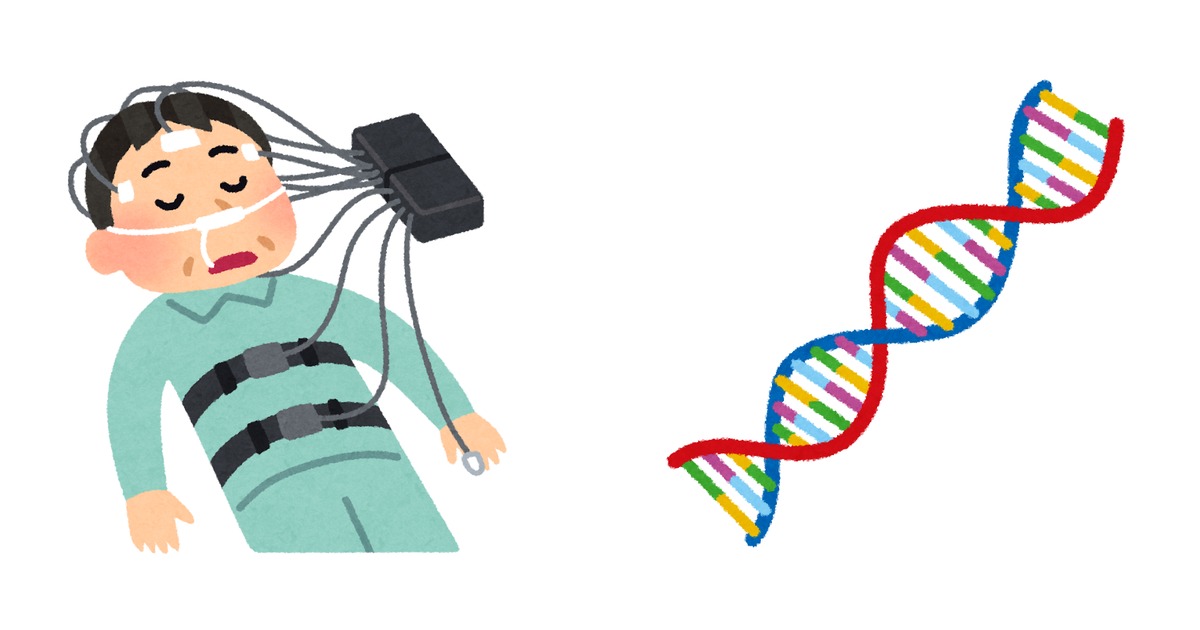
- Is Sleep Apnea Hereditary? What a Polygenic Risk Score Actually Predicts, and What the 49-Locus Genome Study Changed
- Sleep apnea is polygenic, so there is no single sleep apnea gene to inherit
- What “slightly higher likelihood” is worth in real numbers
- The part genetics cannot explain away, and what it means at a normal weight
- Getting an actual diagnosis in the US and Canada, without dreading the sleep lab
- The part you can change, with the effect sizes attached
- Treatment in 2026, including the first drug ever approved for sleep apnea
- Family, disclosure, and the law in the US and Canada
- Frequently asked questions
- Summary
- References
Is Sleep Apnea Hereditary? What a Polygenic Risk Score Actually Predicts, and What the 49-Locus Genome Study Changed
This article is for educational purposes only. It is not a substitute for advice from a licensed physician, board-certified medical geneticist, or board-certified genetic counselor. For any decisions about testing, treatment, or care, consult a qualified clinician. In emergencies, call 911.
My dad has sleep apnea and slept on a machine for years. I keep wondering whether I am next.

That worry brings a lot of people into a genetics clinic, and it is a fair one. Sleep apnea does run in families, but the research describes it as many small genetic effects added together, never one inherited fault.
A consumer report flagged me as higher likelihood. Honestly, part of me wishes I had not opened it.
That hesitation is common and worth respecting. Genetic testing generally shows neutral to mild psychological impact when results are delivered alongside counseling, which is why counseling belongs inside the process rather than bolted on afterwards.
My wife and I have two young kids. Are we handing this down to them?
Cascade testing, where relatives are checked for a known family variant, is well established in the guidelines for single-gene conditions. A risk score works differently, and this article sets out what that difference means for a family.
So what do I actually do with the report? Just file it away and hope?
The route is the ordinary clinical one: your primary care physician first, and a board-certified genetic counselor if a genuinely genetic question comes up. What follows walks through what a score can settle and what it cannot.
Bottom line: Obstructive sleep apnea runs in families. It is not passed down like a single-gene disease. A 2023 study of 523,366 people found five genetic signals for sleep apnea alone. After adjusting for body weight, only one signal reached significance. Combining sleep apnea with snoring raised that count to 49 regions. The obesity gene FTO was the one signal that shrank once weight was accounted for. A 2025 analysis in more than 1.2 million people found parts of the risk that are independent of obesity. So a normal weight does not rule the condition out. A consumer score cannot count your breathing events, and it cannot diagnose or exclude sleep apnea. Only a sleep study ordered by a clinician can do that.
What you’ll learn
- What the 49-locus figure really means, and the single signal left once weight was accounted for
- How wide the heritability range is, from about a third to over two-thirds, and why
- Why a home sleep apnea test is a legitimate first option, and who still needs the lab
- What US and Canadian law protects, and what no commercial driving rule actually says
Sleep apnea is polygenic, so there is no single sleep apnea gene to inherit
If this runs in my family, is there one sleep apnea gene I can just be tested for?
There is not. The 2023 genome study of 523,366 people found five genome-wide signals for sleep apnea alone, and only one of them was still significant after body weight was accounted for.
Obstructive sleep apnea is the repeated collapse of the upper airway during sleep. Breathing stops or shallows, and blood oxygen dips. Clinicians count those events per hour of sleep. That count is the apnea-hypopnea index, or AHI.
The thresholds matter, because every later number is measured against them.
- An AHI of at least 5 events per hour, with daytime sleepiness, marks at least mild sleep apnea.
- An AHI of 15 or more events per hour is treated as moderate to severe.
- An AHI of 30 or more is the threshold used for severe disease in diagnostic accuracy research.
What the 2023 genome study actually found
The study most consumer pages have missed appeared in the journal Sleep in March 2023. It pooled 523,366 people across five cohorts, including 25,008 with sleep apnea. Those cohorts included UK Biobank, FinnGen and the Canadian Longitudinal Study on Aging.
The result chain is easy to misread, so here it is in order. A genome-wide signal is one that clears the strict statistical bar for scanning every gene at once.
| Step | What was analyzed | What came out |
|---|---|---|
| Discovery | Sleep apnea alone, 523,366 people | Five independent genome-wide signals |
| Weight adjustment | The same data, adjusted for body mass index | Only one genome-wide signal remained |
| Multi-trait analysis | Sleep apnea plus snoring | 49 significant independent regions |
| Replication | 23andMe cohort, 1,477,352 people, 175,522 cases | 29 lead variants replicated, with weight adjusted for |
That third row is the one people quote. Those 49 regions come from the combined sleep apnea and snoring analysis, not from sleep apnea alone. It is wrong to say that 49 regions survived weight adjustment.
Everyone quotes the 49 figure. Should I read that as the size of my inherited risk?
Read it carefully. Those 49 regions came from combining sleep apnea with snoring, and 29 lead variants replicated in a 23andMe cohort of 1,477,352 people. A primary care physician should read any report against your real history.
The genes the report may name, and what the study says about each
Gene-based tests in the same paper flagged DLEU1, DLEU7, MSRB3, CTSF and SCAPER, with FTO and TRIM66 named in the discussion. The authors describe them carefully.
- FTO is the well-known obesity locus. Its effect shrank significantly once body mass index was accounted for. The authors read the association as driven by the gene’s strong effect on body weight.
- MSRB3 loss of function has been linked to human deafness, which the authors connect to reported links between hearing impairment and sleep apnea.
- CTSF has been linked to airway wall area measured on chest CT scans.
The anatomy argument later in this article rests on anatomy research, not on these gene names.
Why there is no carrier state and no 50 percent figure
Think of a credit score rather than a missing document. No single entry sets the number. Thousands of tiny entries add up to a percentile.
Three rules follow, and they hold for the rest of this article.
- There is no carrier state. A carrier has one copy of a faulty gene without being ill from it. That idea needs a single faulty gene, and this risk does not work that way.
- There is no Punnett square. That is the school-biology grid for how one gene passes to a child. Thousands of small variants cannot be drawn on a grid.
- There is no 25 or 50 percent transmission figure. No number of that kind exists here.
That is why consumer reports say “slightly higher likelihood” or “slightly lower likelihood.” This article uses the same register. A printout is not a clinical picture, and a primary care physician should read it against a real history.
Section recap: Sleep apnea alone produced five genome-wide signals, and only one remained after weight adjustment. The quoted 49 regions come from a combined sleep apnea and snoring analysis, with 29 variants replicated in 1,477,352 people. There is no carrier state and no 50 percent figure here.
What “slightly higher likelihood” is worth in real numbers
Slightly higher likelihood tells me nothing useful. How much higher is it, really?
In the 2023 study each standard deviation raised the odds by about 1.15 times, and the score explained under half a percent of the variation. Against a baseline near 13 in 100 US men, that is roughly 15 in 100.
Start with how common this is.
| Where | Measure | Figure |
|---|---|---|
| US, 2007-2010 | Mild sleep apnea plus daytime sleepiness, ages 30-70 | 14 percent of men, 5 percent of women |
| US, 2007-2010 | Moderate to severe, AHI of 15 or more | 13 percent of men, 6 percent of women |
| Canada, 2016-2017 | Diagnosed by a health professional | 6.4 percent of adults |
| Canada, 2016-2017 | Screened at moderate or high risk | 15 percent moderate, 15 percent high |
Those two Canadian rows are the most useful pair here. Close to one adult in three screened at moderate or high risk, against 6.4 percent diagnosed. Most of that gap is people never tested.
Globally, a modeled estimate put 936 million adults aged 30 to 69 with mild to severe disease. Read that as a model, not a headcount. Reliable primary data existed for only 16 of 193 countries, and the authors’ own alternative model gave 730 million. The study was funded by a maker of breathing therapy devices, and three authors were employees.
The heritability range, and why it is so wide
Heritability is the share of person-to-person variation that traces to genetic differences. Published heritability estimates for sleep apnea disagree, and honest coverage says why.
- The Cleveland Family Study measured breathing in 1,802 people from 310 families at home. Heritability of the AHI was 0.37, or 37 percent, and 0.33, or 33 percent, in a smaller laboratory sample of 713.
- A Hungarian twin study of 71 twin pairs found heritability of 69 to 83 percent, or 0.69 to 0.83, for breathing indices, with sleep apnea itself 73 percent heritable. Those associations held after adjusting for body mass index.
The low figure comes from a large multi-generation family study. The high figure comes from 71 twin pairs in one country, where 41 percent had sleep apnea. That is a selected group. The honest summary is a range, not a single number.
Family history is the cheaper signal. In 91 families, sleep-disordered breathing was found in 21 percent of relatives of affected patients, against 12 percent of neighborhood controls.
What a percentile is actually worth
The 2023 study tested its own score in 9,221 adults. Each standard deviation, meaning one typical step up or down the scale of scores, raised the odds of sleep apnea by about 1.15 times. Put that against a baseline. About 13 in 100 US men have moderate to severe sleep apnea, and odds 1.15 times higher move that to roughly 15 in 100. People in the top tenth had 50 to 87 percent higher odds than those in the bottom tenth. The score explained under half a percent of the variation. After adjusting for measured body mass index the odds ratio, which is simply how many times higher the odds are, fell to 1.09, but stayed significant.
Does landing in the top tenth mean I should go and get myself tested?
No guideline uses a score that way. The US Preventive Services Task Force found the screening evidence insufficient in 2022, and the sleep medicine guideline says questionnaires and algorithms cannot diagnose without a sleep study. Symptoms and family history, taken to your primary care physician, are what trigger testing.
Newer scores built in over 1.2 million people report odds ratios per standard deviation from 1.38 to 2.75. That gap is instructive. The 2.75 figure comes from sleep apnea defined by a medical diagnosis, and the 1.38 figure from sleep apnea measured over three nights. A score predicts who gets diagnosed better than who has the physiology.
Four limits deserve stating plainly.
- It is probabilistic, not diagnostic. The score yields no AHI, no severity grade and no timing.
- Calibration varies by ancestry. The 2023 discovery and replication cohorts were European ancestry only, and the authors caution against generalizing. Newer work used more diverse samples for that reason.
- The phenotype was coded, not measured. Cases came from self-reported diagnosis or diagnostic codes rather than sleep studies.
- No guideline uses a score to decide who gets tested. In 2022 the US Preventive Services Task Force found the screening evidence insufficient.
That conclusion is called an “I statement.” It is not a recommendation against screening. It means the trials do not answer the question. The Task Force defined its population as “asymptomatic adults (18 years or older) and adults with unrecognized symptoms”. Anyone whose partner has watched them stop breathing is not in that group.
The sleep medicine guideline goes further. Clinical tools, questionnaires and prediction algorithms should not be used to diagnose sleep apnea without a sleep study. A consumer genetic score is weaker still. What does trigger a test is symptoms and family history, brought to a primary care physician.
Section recap: Moderate to severe sleep apnea affects roughly 13 percent of US men and 6 percent of US women. In Canada 6.4 percent are diagnosed, while about 30 percent screen at moderate or high risk. Heritability estimates run from 37 percent in a large family study to 69 to 83 percent in a small twin study. A score shifts odds by about 1.15 per standard deviation.
The part genetics cannot explain away, and what it means at a normal weight
I am not overweight. Does that not put sleep apnea off the table for me?
It does not. In the Cleveland Family Study the genetic overlap between the breathing index and body fat measures ran from 0.57 to 0.61, so obesity explains close to 40 percent of the genetic variance and the majority sits elsewhere.
Most pages collapse this question into weight within two paragraphs. The data do not support that.
The Cleveland Family Study measured the overlap directly. A genetic correlation runs from 0, meaning no shared genetics, to 1, meaning entirely shared. Between the AHI and body fat measures it ran from 0.57 to 0.61, so obesity explains close to 40 percent of the genetic variance. The authors concluded that the overlap is substantial but not complete, running through both weight-dependent and weight-independent pathways.
A 2025 analysis built two versions of a sleep apnea score, one adjusted for the genetic contribution of body weight and one not. It concluded that distinct components of the risk are both related to and independent of obesity. Two designs, two decades apart, reached the same place.
Where the non-weight route runs
The National Heart, Lung, and Blood Institute states the mechanism in one sentence: your genes help determine the size and shape of your skull, face and upper airway. It also lists large tonsils, a large neck and a large tongue as ways the airway narrows.
Measurement research fills in the detail. A meta-analysis of head and face X-ray studies found strong evidence for three features:
- Reduced pharyngeal airway space, by about 1.55 mm on average.
- A hyoid bone sitting lower in the neck, by about 5.45 to 6.89 mm.
- Greater anterior lower facial height, by about 2.48 mm.
Less consistent studies also reported a set-back jaw and larger tongue and soft palate areas.
Anatomy differs by ancestry too. One study compared 39 Japanese-Brazilian and 39 white men matched for age and severity. The Japanese-Brazilian men had smaller bony airway dimensions, while the white men had larger soft tissue. Obesity measures correlated with airway collapsibility similarly in both groups.
The message for a reader who is not overweight
A normal body mass index does not exclude sleep apnea. In a general adult sample monitored for three nights at home, 17.2 percent of women and 30.7 percent of men had an AHI of 15 or more.
If you are lean and have been told you cannot have sleep apnea, a predisposition acting through airway shape is a reason to ask again. That conversation belongs with a primary care physician, not with a report.
A doctor once told me I was too thin for this. Do I just accept that answer?
You can ask again. Monitored at home for three nights, 30.7 percent of men and 17.2 percent of women had 15 or more events per hour, so raising airway shape with your primary care physician is entirely reasonable.
Section recap: Body fat explains close to 40 percent of the genetic variance in sleep apnea, which leaves the majority elsewhere. A 2025 analysis in over 1.2 million people found genetic components both related to and independent of obesity. Airway shape is measurably different in people with sleep apnea, and a normal weight does not rule the condition out.
Getting an actual diagnosis in the US and Canada, without dreading the sleep lab
A night in a lab covered in wires is honestly what has stopped me booking anything.
That fear is common and often unnecessary. The American Academy of Sleep Medicine’s 2017 guideline recommends either polysomnography or a technically adequate home test for uncomplicated adults whose symptoms suggest increased risk of moderate to severe disease.
The word “test” covers three different products here. Telling them apart answers most practical questions.
| Kind of test | Who orders it | What it can tell you | What it cannot |
|---|---|---|---|
| Consumer polygenic report | You, online | Where your score sits next to other people’s | Whether you have sleep apnea, or what to do next |
| Home sleep apnea test | A clinician | Whether breathing events are happening, in your own bed | Anything about your genes |
| In-lab polysomnography | A clinician | The full sleep study, the standard diagnostic test | Anything about your genes |
A consumer polygenic report is sold as a health predisposition product, not a diagnostic one. According to the testing company’s own product materials, research-grade reports of that kind are not diagnostic tests. That framing comes from the company, not from a regulator. Neither the US nor the Canadian payment pathway acts on such a score at any point.
What the sleep medicine guideline actually says
The American Academy of Sleep Medicine published its diagnostic guideline in 2017, and it is more permissive than most people expect.
- Polysomnography is the standard diagnostic test where a comprehensive sleep evaluation raises concern.
- For uncomplicated adults whose symptoms point to an increased risk of moderate to severe disease, either polysomnography or a technically adequate home test is recommended.
- If a single home test is negative, inconclusive or technically inadequate, polysomnography should be performed.
- Testing should be done alongside a comprehensive sleep evaluation and adequate follow-up.
That second point removes the overnight-lab dread for many adults. The third is the step most often skipped in practice.
Who still needs the in-lab study
The guideline names the groups for whom polysomnography is recommended rather than a home test:
- Significant cardiorespiratory disease
- Potential respiratory muscle weakness from a neuromuscular condition
- Awake hypoventilation, or suspected sleep-related hypoventilation
- Chronic opioid medication use
- History of stroke
- Severe insomnia
If any of those apply to you, a clinician will start with the lab study instead.
The questionnaires a clinician will actually use
Two instruments turn up in nearly every sleep clinic.
| Instrument | Sensitivity | Specificity | What it is good for |
|---|---|---|---|
| STOP-BANG, moderate disease | 90 percent | 36 percent | Ruling out, and triggering a test |
| Epworth Sleepiness Scale, moderate disease | 47 percent | 62 percent | Measuring sleepiness, not detecting apnea |
Sensitivity is how often a test catches the people who have the condition. Specificity is how often it correctly clears the people who do not. A high STOP-BANG score means “get tested,” not “you have it.” A low Epworth score rules nothing out, which is the opposite of how consumer pages present it. Neither can diagnose without a sleep study.
What should I bring to the appointment so the visit is not wasted?
The symptoms, the family history, and the report if you want. Clinicians use STOP-BANG, which is 90 percent sensitive but only 36 percent specific for moderate disease, so ask your primary care physician whether a home test is the next step.
Access and cost
In the US, Medicare covers the sleep testing devices used to diagnose sleep apnea, attended or unattended, for people with clinical signs and symptoms. Home testing is a covered, physician-ordered pathway, not a workaround. Commercial plans generally follow with documentation of medical necessity, and dollar amounts vary too much to quote.
In Canada the route runs through a family physician referral to a sleep clinic, and funding is provincial. Ontario’s Assistive Devices Program covers airway pressure equipment at 75 percent of the approved price. Coverage is 100 percent for people on Ontario Works or the Ontario Disability Support Program. Eligibility needs an Ontario health card and an assessment at a registered sleep clinic. Those terms are Ontario’s and do not carry over to other provinces.
Section recap: Polysomnography is the standard test, but a home test is a recommended option for uncomplicated adults at increased risk. A negative or inconclusive home test must be followed by polysomnography, and six groups need the lab from the start. Medicare covers home testing, and Ontario subsidizes equipment at 75 percent.
The part you can change, with the effect sizes attached
If a chunk of this is genetic, is there any real point in me changing habits?
There is, and the sizes are measured. In the Sleep AHEAD randomized trial each kilogram lost was associated with 0.6 fewer events per hour, and participants losing 10 kilograms or more saw an 11.3 event per hour reduction.
Weight, and what the randomized trial showed
The Sleep AHEAD trial randomized 264 adults with type 2 diabetes and obesity to an intensive lifestyle program or to diabetes support and education. Mean starting AHI was 23.2 events per hour.
- The lifestyle group lost 10.8 kg at one year, against 0.6 kg in the comparison group.
- Adjusted AHI fell by 9.7 events per hour relative to that group.
- Each kilogram lost was associated with a fall of 0.6 events per hour.
- Those losing 10 kg or more saw an 11.3 events per hour reduction, better than every other weight change category.
- Remission, meaning an AHI under 5, reached 13.6 percent against 3.5 percent.
Weight loss cleared the condition in roughly one participant in seven. Everyone enrolled had type 2 diabetes and obesity, so the effect does not transfer automatically to every reader.
Alcohol, which is the fastest lever
A meta-analysis of trials that gave alcohol to volunteers found the AHI rose by 2.33 events per hour on average, and oxygen saturation fell. The effect was larger in snorers, at 4.20 events per hour, and larger again in people already diagnosed with sleep apnea, at 7.10 events per hour. Observational studies put the odds of sleep apnea about 1.33 times higher in alcohol users.
An extra 7.1 events per hour can move a night from moderate toward severe. It is also the one variable a reader controls by dinnertime.
Is the glass of wine with dinner genuinely worth worrying about?
It is the fastest lever available. A meta-analysis found alcohol raised the index by 2.33 events per hour on average, and by 7.10 in people already diagnosed. Whether that matters for you is a question for your doctor once a diagnosis exists.
Sleep position, tobacco, and honest limits
Positional therapy keeps a person off their back. In a 2024 meta-analysis it cut the share of the night spent on the back by about 26 percentage points. Against oral appliance therapy it showed no significant difference in total AHI or adherence, though oral appliances did better on sleepiness.
Tobacco is worth a caution rather than a claim. The alcohol meta-analysis that produced the 1.33 odds ratio also looked at tobacco, and found no association. That evidence was rated low to very low. Consumer pages assert the link routinely; this meta-analysis does not support it.
And the boundary generic articles miss: none of these levers is guaranteed to normalize an AHI driven by airway shape. A person with a set-back jaw cannot diet their way out of that anatomy. That is a reason to get tested, not to give up. A primary care physician can order the test that settles it.
Section recap: Weight loss is the strongest modifiable lever, at about 0.6 fewer events per hour per kilogram. Remission reached 13.6 percent versus 3.5 percent in a randomized trial. Alcohol raised the AHI by 7.10 events per hour in people already diagnosed, and the common tobacco claim is not supported here.
Treatment in 2026, including the first drug ever approved for sleep apnea
If I am eventually diagnosed, am I stuck wearing a mask every night for life?
Not necessarily. In the SAVE trial airway pressure cut the index from 29.0 to 3.7 events per hour, but oral appliances, an implanted nerve stimulator and now an approved drug are all part of the picture.
Two halves: what has been standard for decades, and what changed.
| Option | Regulatory position | What the trial evidence shows |
|---|---|---|
| Positive airway pressure | Long-standing standard of care | AHI fell from 29.0 to 3.7 events per hour, with better sleepiness, mood and quality of life |
| Oral appliance | Dentist-fitted alternative | Lower non-supine AHI and sleepiness than positional therapy |
| Hypoglossal nerve stimulation, an implant that nudges the tongue nerve to hold the airway open | FDA premarket approval P130008, 30 April 2014 | Median AHI fell 68 percent, from 29.3 to 9.0 events per hour at 12 months |
| Tirzepatide (ZEPBOUND) | FDA 20 December 2024; Health Canada June 2026 | AHI fell 25.3 and 29.3 events per hour over 52 weeks, versus 5.3 and 5.5 on placebo |
What the CPAP evidence really says
The SAVE trial randomized 2,717 adults aged 45 to 75 with moderate to severe sleep apnea and existing heart or blood vessel disease.
The device worked. Mean AHI fell from 29.0 to 3.7 events per hour. Over a mean 3.7 years, cardiovascular events occurred in 17.0 percent of the CPAP group and 15.4 percent on usual care, with no significant difference. Mean adherence was 3.3 hours per night.
That result is often misquoted. In the same trial, CPAP reduced snoring and daytime sleepiness and improved quality of life and mood. Most participants were minimally sleepy at the start, by design. The open question is whether the therapy failed or the dose did.
The implanted option, and who it is for
The hypoglossal nerve implant, also called upper airway stimulation, was studied in 126 people who could not accept or tolerate CPAP. Median AHI fell 68 percent at 12 months, and serious procedure-related events occurred in under 2 percent. When the device was switched off in a randomized substudy, the AHI rose again. Mean body mass index was 28.4, so this is not a therapy limited to severe obesity.
Eligibility is set by the approval and applied by a surgeon. The original 2014 approval covered adults in a defined AHI range who could not tolerate airway pressure therapy, and required a sedated airway exam. Many supplements have been approved since, so treat those criteria as history. Canadian licensing for this implant could not be confirmed.
The first drug ever approved for sleep apnea
Two phase 3 trials tested tirzepatide against placebo for 52 weeks in 469 adults with moderate to severe sleep apnea and obesity. Trial 1 enrolled people not using airway pressure therapy, and trial 2 people already on it. Mean starting AHI was 51.5 and 49.5 events per hour, well above where most readers sit.
| Result at 52 weeks | Trial 1, tirzepatide | Trial 1, placebo | Trial 2, tirzepatide | Trial 2, placebo |
|---|---|---|---|---|
| Fall in the AHI, events per hour | 25.3 | 5.3 | 29.3 | 5.5 |
| Composite endpoint met | 42.2 percent | 15.9 percent | 50.2 percent | 14.3 percent |
| Fall in body weight | 17.7 percent | 1.6 percent | 19.6 percent | 2.3 percent |
Two rows of that table need words rather than figures.
- The composite endpoint is not a cure. It means an AHI under 5, or 5 to 14 with an Epworth score of 10 or less.
- Side effects were mostly digestive. In trial 1 that meant diarrhea in 26.3 percent, nausea in 25.4 percent and vomiting in 17.5 percent. Discontinuation for adverse events ran at 4.4 and 3.4 percent, and one case of acute pancreatitis occurred.
Those percentages are often reported as “remission.” The trial reports them as a combined endpoint of a near-normal breathing count with low sleepiness. The manufacturer’s own announcement of the Canadian authorization does describe the same result as remission or mild, non-symptomatic disease. That is the sponsor’s wording, not the regulator’s.
There is a drug now. Could I skip the machine and just take that instead?
Nobody can promise that. Those trials enrolled only adults with obesity, at a mean starting index near 50 events per hour, and the drug was not tested as a replacement for airway pressure. Which option fits you is your physician’s call after a diagnosis.
The regulatory record is specific. The US Food and Drug Administration approved the sleep apnea indication on 20 December 2024 under a priority review, and it appears in the current label. Health Canada authorized it in June 2026, the first sleep apnea medication approved in Canada. The Canadian indication covers adults with obesity, meaning a body mass index of 30 or greater. Those two Canadian facts come from the manufacturer’s announcement, because the Health Canada authorization record itself could not be retrieved. The product’s Canadian drug identification numbers are on the public database, listed as marketed. Both indications require use alongside a reduced-calorie diet and increased physical activity.
The label carries a boxed warning, the strongest warning the FDA can require, about thyroid C-cell tumors seen in rats. It is contraindicated in people with a personal or family history of medullary thyroid carcinoma, or with multiple endocrine neoplasia syndrome type 2. The trials enrolled only people with obesity and did not test the drug as a replacement for airway pressure therapy.
None of this is selected by genotype. No US or Canadian guideline uses a polygenic score to decide who is tested or treated. Which option fits a person is a clinical decision, made after a diagnosis exists.
Section recap: CPAP abolished events and improved sleepiness, mood and quality of life, though a trial at 3.3 hours of nightly use showed no fewer cardiovascular events. Tirzepatide became the first drug approved for sleep apnea, from the FDA in December 2024 and Health Canada in June 2026. Each option is chosen by a clinician after diagnosis, never by a genetic score.
Family, disclosure, and the law in the US and Canada
Should my brother and my kids be tested now, since my report flagged something?
There is nothing to cascade here. Cascade testing means checking relatives for a known family variant, and a polygenic score supplies no variant to look for, so no relative can be cleared or flagged by it.
There is nothing to cascade here. Cascade testing means testing relatives for a known family variant, and a polygenic score gives no variant to look for. No relative can be cleared or flagged.
What does travel through a family is anatomy and habit. The National Heart, Lung, and Blood Institute is explicit that genes shape skull, face and airway size. So the useful currency is a family history and a few direct questions.
- Does anyone say you stop breathing at night?
- Is your snoring loud enough to be heard through a closed door?
- Do you wake up unrefreshed, most mornings?
- Do you fall asleep watching television, or worse, driving?
Those questions cost nothing, and clinicians use screening questionnaires built on the same signals.
Sleep apnea in children is a separate question and belongs with a pediatrician. Large tonsils narrowing the airway is a recognized route in the young. Nothing in this article’s adult reasoning should be applied to a teenager, and there is no genetic test to order for one.
The law, split by country
| United States | Canada | |
|---|---|---|
| Statute | Genetic Information Nondiscrimination Act, Pub. L. 110-233, 2008 | Genetic Non-Discrimination Act, S.C. 2017, c. 3 |
| Health insurance | Protected | Covered by the general prohibition |
| Employment | Protected | Covered, with Canada Labour Code amendments |
| Life, disability, long-term care | Not covered | Covered by the general prohibition on requiring a test or results |
| Court status | Enacted 21 May 2008 | Upheld by the Supreme Court of Canada, 2020 SCC 17 |
The Canadian statute is broader. It prohibits requiring a person to undergo a genetic test, or to disclose results, as a condition of goods, services or a contract. Its definition of a genetic test covers DNA analysis for predicting disease risk, which includes a consumer polygenic score. The Supreme Court of Canada upheld it as valid criminal law on 10 July 2020.
One caveat outweighs both statutes here. A documented sleep apnea diagnosis is medical information, not genetic information, and neither law shields it. The diagnosis is what an insurer or an examiner will actually see.
Commercial driving: what the rule is, and what it is not
This is why many drivers avoid getting tested, and the facts are not what most assume.
- There is no federal sleep apnea screening, testing or treatment rule for US commercial drivers.
- Congress provided in 2013 that any such requirement needs a formal rulemaking, and the agency withdrew its sleep apnea rulemaking in 2017.
- Certification rests on the general respiratory standard, and the certified medical examiner decides who is screened.
- Whether treatment is adequate is likewise left to that examiner’s judgment.
There is no published federal AHI cut-off, adherence percentage or certification interval to quote. In Canada, commercial licensing is provincial and informed by national medical fitness guidance.
The practical conclusion is the uncomfortable one. A diagnosed and effectively treated driver is generally certifiable, while untreated symptomatic sleep apnea is the real jeopardy. Untreated disease is associated with motor vehicle crashes. Avoiding diagnosis to protect a license is the worse risk.
I drive commercially. Will a diagnosis cost me my certificate?
There is no federal sleep apnea rule for US commercial drivers, and treated drivers are generally certifiable while untreated disease is associated with crashes. Raise it with your primary care physician and your certified medical examiner rather than avoiding the test.
Sleep apnea is rarely a genetic counseling referral in its own right, because there is no variant to trace. If a genetic question does arise, the National Society of Genetic Counselors runs a Find a Genetic Counselor directory. The Canadian Association of Genetic Counsellors maintains its own listing.
Section recap: There is no cascade testing for a polygenic score, so family history and observed symptoms are the usable currency. US law leaves life, disability and long-term care insurance uncovered, while Canada’s law reaches contracts generally and was upheld in 2020. There is no federal sleep apnea rule for US commercial drivers, and everything turns on the medical examiner’s judgment.
Frequently asked questions
Will I get sleep apnea?
Nobody can say from a score. Moderate to severe disease already affects about 13 percent of US men and 6 percent of US women. Each standard deviation of a polygenic score shifts the odds by roughly 1.15 times. Plenty of high-scoring people never develop it, and plenty of patients score in the middle. Symptoms plus family history, brought to a primary care physician, are what trigger a test.
Will my children inherit it?
Children inherit half of each parent’s variants, so part of a polygenic risk is passed on. There is no 25 or 50 percent figure to quote, and nothing to test them for. What is worth passing on is the family history and the four questions above. Sleep apnea in children belongs with a pediatrician, not with adult reasoning.
Will this affect my health or life insurance?
In the US, health insurance and employment are protected by federal law. Life, disability and long-term care insurance are explicitly not covered. A life insurer may lawfully ask in most states. In Canada, requiring a genetic test or its results as a condition of a contract is prohibited, insurance included. In both countries, a documented diagnosis is medical information and is shielded by neither law.
Can my employer find out, and what about my commercial driving certificate?
US federal law bars employers from using genetic information in job decisions. Canada’s statute bars requiring a test or its results as a condition of a contract. Commercial driving is different, because it involves a medical examination, not a genetic one. There is no federal sleep apnea rule for US drivers, and the certified medical examiner decides on screening and on adequate treatment. Treated drivers are generally certifiable.
Should I get a second opinion, or a better test?
For nearly every reader, the better test is not genetic.
- A home sleep apnea test is a recommended option for uncomplicated adults at increased risk.
- A negative, inconclusive or technically inadequate home test must be followed by a full sleep study.
- Six specific conditions call for the lab from the start.
Bring the score, the symptoms and the family history to a primary care physician.
Section recap: A score shifts odds slightly and settles nothing, while symptoms and family history trigger testing. There is nothing to test children for, and pediatric sleep apnea is a separate question. US law leaves life and disability insurance uncovered, and a diagnosis is not protected in either country.
Summary
Sleep apnea really does run in families, and the biology is better mapped than consumer pages suggest. The mapping is subtler than the headline.
Four points carry most of the practical weight.
- Sleep apnea alone produced five genome-wide signals, and only one remained after weight adjustment. The 49 regions people quote come from a combined analysis with snoring.
- The genetics is not simply obesity genetics. Body fat explains close to 40 percent of the genetic variance, and a 2025 analysis found components independent of obesity. A normal weight does not rule the condition out.
- What is modifiable is quantified: about 0.6 fewer events per hour per kilogram lost, and up to 7.1 extra events per hour after alcohol.
- The treatment landscape changed. Tirzepatide became the first drug approved for sleep apnea, from the FDA in December 2024 and Health Canada in June 2026.
The score itself changes nothing clinically. No guideline uses it to decide who gets tested, and no payment pathway acts on it. Its only honest use is as a prompt.
The useful next step is an appointment with a primary care physician, carrying the report, the family history and a plain account of the symptoms. If the evaluation points to increased risk of moderate to severe disease, a home sleep apnea test may be all that is needed. That is one night in your own bed, not the sleep lab most people have been dreading.
This article is for educational purposes only. It is not a substitute for advice from a licensed physician, board-certified medical geneticist, or board-certified genetic counselor. For any decisions about testing, treatment, or care, consult a qualified clinician. In emergencies, call 911.
References
- Campos AI, Garcia-Marin LM, Byrne EM, et al. (2023). Discovery of genomic loci associated with sleep apnea risk through multi-trait GWAS analysis with snoring. Sleep 46(3):zsac308 (9 March 2023). DOI 10.1093/sleep/zsac308. PMID 36525587. PMCID PMC9995783. https://pubmed.ncbi.nlm.nih.gov/36525587/
- Kurniansyah N, Strausz S, Chittoor G, et al. (2025). Polygenic scores for obstructive sleep apnoea reveal pathways contributing to cardiovascular disease. EBioMedicine 117:105790 (July 2025, e-published 4 June 2025). DOI 10.1016/j.ebiom.2025.105790. PMID 40472801. PMCID PMC12171572. https://pubmed.ncbi.nlm.nih.gov/40472801/
- Patel SR, Larkin EK, Redline S (2008). Shared genetic basis for obstructive sleep apnea and adiposity measures. International Journal of Obesity (London) 32(5):795-800. Cleveland Family Study. DOI 10.1038/sj.ijo.0803803. PMID 18209735. PMCID PMC2672200. With Redline S, Tishler PV, Tosteson TD, et al. (1995). The familial aggregation of obstructive sleep apnea. American Journal of Respiratory and Critical Care Medicine 151(3 Pt 1):682-687. PMID 7881656. https://pubmed.ncbi.nlm.nih.gov/18209735/
- Szily M, Tarnoki AD, Tarnoki DL, et al. (2019). Genetic influences on the onset of obstructive sleep apnoea and daytime sleepiness: a twin study. Respiratory Research 20(1):125 (17 June 2019). Hungarian Twin Registry. DOI 10.1186/s12931-019-1095-x. PMID 31208424. PMCID PMC6580623. https://pubmed.ncbi.nlm.nih.gov/31208424/
- Benjafield AV, Ayas NT, Eastwood PR, et al. (2019). Estimation of the global prevalence and burden of obstructive sleep apnoea: a literature-based analysis. Lancet Respiratory Medicine 7(8):687-698 (August 2019). Funded by ResMed. DOI 10.1016/S2213-2600(19)30198-5. PMID 31300334. PMCID PMC7007763. https://pubmed.ncbi.nlm.nih.gov/31300334/
- US Preventive Services Task Force; Mangione CM, Barry MJ, Nicholson WK, et al. (2022). Screening for Obstructive Sleep Apnea in Adults: US Preventive Services Task Force Recommendation Statement. JAMA 328(19):1945-1950 (15 November 2022). DOI 10.1001/jama.2022.20304. PMID 36378202. Companion evidence report: Feltner C, Wallace IF, Aymes S, et al. JAMA 2022;328(19):1951-1971. DOI 10.1001/jama.2022.18357. PMID 36378203. https://pubmed.ncbi.nlm.nih.gov/36378202/
- Kapur VK, Auckley DH, Chowdhuri S, et al. (2017). Clinical Practice Guideline for Diagnostic Testing for Adult Obstructive Sleep Apnea: An American Academy of Sleep Medicine Clinical Practice Guideline. Journal of Clinical Sleep Medicine 13(3):479-504 (15 March 2017). DOI 10.5664/jcsm.6506. PMID 28162150. PMCID PMC5337595. https://pubmed.ncbi.nlm.nih.gov/28162150/
- Malhotra A, Grunstein RR, Fietze I, et al.; SURMOUNT-OSA Investigators (2024). Tirzepatide for the Treatment of Obstructive Sleep Apnea and Obesity. New England Journal of Medicine 391(13):1193-1205 (3 October 2024). ClinicalTrials.gov NCT05412004. DOI 10.1056/NEJMoa2404881. PMID 38912654. PMCID PMC11598664. https://pubmed.ncbi.nlm.nih.gov/38912654/
- US Food and Drug Administration, NDA 217806 supplement S-013, priority review, approved 20 December 2024, approval letter and current prescribing information for ZEPBOUND (tirzepatide); Health Canada Drug Product Database record for ZEPBOUND, Eli Lilly Canada Inc., DINs 02557509-02557568, status Marketed; Eli Lilly Canada authorization announcement for moderate to severe obstructive sleep apnea in adults with obesity, June 2026, which is the source of the Canadian authorization date and indication wording. https://www.accessdata.fda.gov/drugsatfda_docs/appletter/2024/217806Orig1s013ltr.pdf
- McEvoy RD, Antic NA, Heeley E, et al.; SAVE Investigators and Coordinators (2016). CPAP for Prevention of Cardiovascular Events in Obstructive Sleep Apnea. New England Journal of Medicine 375(10):919-931 (8 September 2016). ClinicalTrials.gov NCT00738179. DOI 10.1056/NEJMoa1606599. PMID 27571048. https://pubmed.ncbi.nlm.nih.gov/27571048/
- Strollo PJ, Soose RJ, Maurer JT, et al.; STAR Trial Group (2014). Upper-Airway Stimulation for Obstructive Sleep Apnea. New England Journal of Medicine 370(2):139-149 (9 January 2014). ClinicalTrials.gov NCT01161420. DOI 10.1056/NEJMoa1308659. PMID 24401051. With US Food and Drug Administration premarket approval P130008, Inspire II Upper Airway Stimulator, original decision 30 April 2014. https://pubmed.ncbi.nlm.nih.gov/24401051/
- Foster GD, Borradaile KE, Sanders MH, et al.; Sleep AHEAD Research Group of the Look AHEAD Research Group (2009). A randomized study on the effect of weight loss on obstructive sleep apnea among obese patients with type 2 diabetes: the Sleep AHEAD study. Archives of Internal Medicine 169(17):1619-1626 (28 September 2009). ClinicalTrials.gov NCT00194259. DOI 10.1001/archinternmed.2009.266. PMID 19786682. PMCID PMC2879275. https://pubmed.ncbi.nlm.nih.gov/19786682/
- Kolla BP, Foroughi M, Saeidifard F, et al. (2018). The impact of alcohol on breathing parameters during sleep: A systematic review and meta-analysis. Sleep Medicine Reviews 42:59-67. DOI 10.1016/j.smrv.2018.05.007. PMID 30017492. With Taveira KVM, Kuntze MM, Berretta F, et al. (2018). Association between obstructive sleep apnea and alcohol, caffeine and tobacco: A meta-analysis. Journal of Oral Rehabilitation 45(11):890-902. DOI 10.1111/joor.12686. PMID 29971810. And Mohamed AS, Mohammed AH, Liu C, et al. (2024). Oral appliance therapy versus positional therapy for managing positional obstructive sleep apnea. BMC Oral Health 24(1):666. DOI 10.1186/s12903-024-04277-8. PMID 38849827. https://pubmed.ncbi.nlm.nih.gov/30017492/
- Chiu HY, Chen PY, Chuang LP, et al. (2017). Diagnostic accuracy of the Berlin questionnaire, STOP-BANG, STOP, and Epworth sleepiness scale in detecting obstructive sleep apnea. Sleep Medicine Reviews 36:57-70. DOI 10.1016/j.smrv.2016.10.004. PMID 27919588. With Neelapu BC, Kharbanda OP, Sardana HK, et al. (2017). Craniofacial and upper airway morphology in adult obstructive sleep apnea patients: A systematic review and meta-analysis of cephalometric studies. Sleep Medicine Reviews 31:79-90. DOI 10.1016/j.smrv.2016.01.007. PMID 27039222. And Schorr F, Kayamori F, Hirata RP, et al. (2016). Different Craniofacial Characteristics Predict Upper Airway Collapsibility in Japanese-Brazilian and White Men. Chest 149(3):737-746. DOI 10.1378/chest.15-0638. PMID 26291487. https://pubmed.ncbi.nlm.nih.gov/27919588/
- National Heart, Lung, and Blood Institute, National Institutes of Health. Sleep Apnea: Causes and Risk Factors, page last updated 9 January 2025. With Statistics Canada, Health Fact Sheet “Sleep Apnea in Canada, 2016 and 2017”, Canadian Health Measures Survey Cycle 5, catalogue no. 82-625-X, released 24 October 2018. https://www.nhlbi.nih.gov/health/sleep-apnea/causes
- Genetic Information Nondiscrimination Act of 2008, Pub. L. 110-233, enacted 21 May 2008, as summarized by the National Human Genome Research Institute; Genetic Non-Discrimination Act, S.C. 2017, c. 3, Justice Laws Website, Department of Justice Canada; Reference re Genetic Non-Discrimination Act, 2020 SCC 17, [2020] 2 SCR 283, judgment rendered 10 July 2020, Supreme Court of Canada; National Society of Genetic Counselors, Find a Genetic Counselor directory; Canadian Association of Genetic Counsellors. https://laws-lois.justice.gc.ca/eng/annualstatutes/2017_3/FullText.html and https://www.genome.gov/about-genomics/policy-issues/Genetic-Discrimination and https://findageneticcounselor.nsgc.org/ and https://www.cagc-accg.ca/
- Federal Motor Carrier Safety Administration, US Department of Transportation. Qualifications of Drivers: Medical Examiner’s Handbook Regulatory Guidance, 89 FR 3892, published 22 January 2024, Docket FMCSA-2022-0111, 49 CFR Part 391. With Public Law 113-45, 127 Stat. 557, 15 October 2013 (49 U.S.C. 31305 note), and Evaluation of Safety Sensitive Personnel for Moderate-to-Severe Obstructive Sleep Apnea, withdrawal notice, 82 FR 37038, 8 August 2017. https://www.govinfo.gov/content/pkg/FR-2024-01-22/html/2024-01056.htm
- Centers for Medicare & Medicaid Services. National Coverage Determination 240.4.1, Sleep Testing for Obstructive Sleep Apnea (OSA), effective for claims with dates of service on and after 3 March 2009. With Ontario Ministry of Health, Assistive Devices Program, Respiratory Equipment and Supplies. https://www.cms.gov/medicare-coverage-database/view/ncd.aspx?NCDId=330&NCDver=1
Last updated: 2026-09-01
Author: Yu Mizuno (Editor-in-Chief, non-physician), GeneLumen editorial team. This article aggregates 18 sources from peer-reviewed medical literature and public health agencies (tier 1=14 / tier 2=4), including NIH resources (the National Heart, Lung, and Blood Institute and the National Human Genome Research Institute), the US Preventive Services Task Force, the American Academy of Sleep Medicine, the US Food and Drug Administration, Health Canada, the Centers for Medicare & Medicaid Services, the Federal Motor Carrier Safety Administration, Statistics Canada, Canadian federal statute and Supreme Court sources, and PubMed-indexed publications.
This article is for educational purposes only and is not a substitute for medical advice from a licensed physician, board-certified medical geneticist, or board-certified genetic counselor. In emergencies, call 911 (US/Canada).
Related: Genetic Diseases category
🇯🇵 For readers in Japan — a separate Japanese edition written for Japan’s healthcare system (not a translation): https://genelumen.com/ja/ja-genetic-diseases/sleep-apnea-polygenic-risk-kazokureki-japan